
PolyJet, material jetting
PolyJet 3D printing service: rigid and flexible materials in one part
Rigid and soft materials in one build.
Our UK PolyJet 3D printing service jets photopolymer droplets and cures them with UV light. Rigid and flexible materials can sit in one part, such as a soft grip on a rigid body. It suits design reviews, fit checks and ergonomic prototypes.
- ToleranceA few hundredths to a few tenths of a mm on small features
- Lead timeQuoted per part
- Build volumeEnquire about larger projects: we may be able to accommodate them. We also offer technologies beyond the four processes listed.Quoted per part
| Build volume | Quoted per part | process |
|---|---|---|
| Layer height | 16 to 30 microns | typical |
| Tolerance | A few hundredths to a few tenths of a mm on small features | typical |
| Lead time | Quoted per part | process |
| Materials | Rigid, flexible and transparent photopolymers | process |
| Supports | Gel support, cleared in finishing | process |
Larger builds are made at our Devon production site: send the drawings for a quote.
PolyJet process steps
- 01Review
An engineer checks the model, the intended materials and the support strategy.
- 02Prepare
The model is sliced and a material is assigned to each body or region.
- 03Jet
Photopolymer droplets are jetted onto the build tray.
- 04Cure
UV light cures each layer as it is deposited.
- 05Finish and inspect
Support material is removed, surfaces are finished and parts are checked against the drawing.
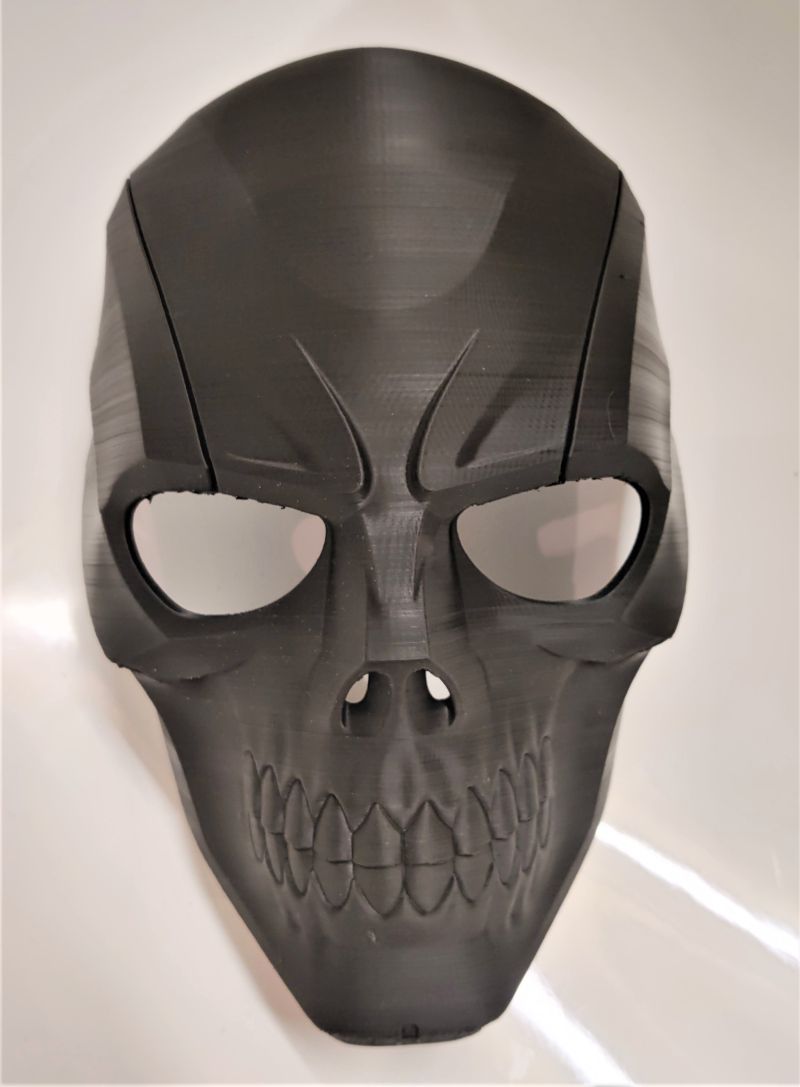
When to use PolyJet
What PolyJet suits
- Appearance and ergonomic prototypes
- Parts with rigid and flexible regions together
- Fine detail, thin walls and smooth surfaces
- Fit checks, presentation models and design reviews
- Soft grips on rigid bodies in a single build
Also consider
- Structural parts under sustained load: FDM or SLS
- Large parts: FDM, up to 1000 mm
- Long outdoor or high-temperature use: FDM ASA or ULTEM
- High-volume production: FDM or SLS
PolyJet materials
Rigid, flexible and transparent photopolymer families, quoted per part. The SLA range covers single-material resins.
| Material | Best for | Cost |
|---|---|---|
| Rigid photopolymerRigid jetted resin | Stiff, detailed models and housings | £££££On request |
| Flexible photopolymerRubber-like jetted resin | Soft grips and seals on rigid bodies | £££££On request |
| Transparent photopolymerClear jetted resin | Lenses, covers, light pipes | £££££On request |
| More materials available. We can source most grades not listed here. Request a material | ||
Cost is relative: more £ means a higher price per part.
PolyJet design guidelines
Typical guidance. An engineer confirms it for your part.
| Feature | Key figure | Guideline |
|---|---|---|
| Material assignment | By body or region | Define rigid and flexible zones in the CAD. |
| Thin walls, fine features | Keep supported | Thin photopolymer features are fragile before finishing. |
| Enclosed cavities | Open them | Support material needs a route out. |
| Rigid-to-flexible transitions | Generous fillets | Spread stress across the join. |
Rules of thumb
- Assign materials by regionMark rigid and flexible zones in the CAD.
- Open cavitiesSupport material needs a route out.
- Fillet the joinsRounded rigid-to-flexible transitions spread stress.
- Use it for modelsBest suited to detailed fit checks and design reviews.
PolyJet tolerance
PolyJet accuracy is typically a few hundredths to a few tenths of a millimetre on small features, depending on geometry and material. The tolerance for your part is quoted per part.
Comparison with other processes at 100 mm
Calculated from our stated tolerances. Critical dimensions are flagged on the drawing and checked before dispatch.
PolyJet FAQ
What makes PolyJet different from SLA?
PolyJet jets droplets and combines several materials in one build. SLA cures single-material resin in a vat.
Can PolyJet print in multiple materials?
Yes. Rigid, flexible and transparent photopolymers combine in one build.
Are PolyJet parts strong?
They suit detailed models and fit checks. For sustained load, choose FDM or SLS.
What is the maximum PolyJet part size?
Size depends on the materials chosen and is confirmed on your quote. Enquire about larger projects: we may be able to accommodate them.
How do I get a PolyJet quote?
Upload a STEP or STL file and list your requirements. An engineer confirms materials, tolerance, finish and lead time on the quote.
Companies that use HenleyPrint3D










Send CAD for a PolyJet quote
Upload a STEP or STL file with your requirements. An engineer confirms materials, tolerance, finish and lead time before we build. Uploads are secure and confidential.