
Industries / Motorsport and racing
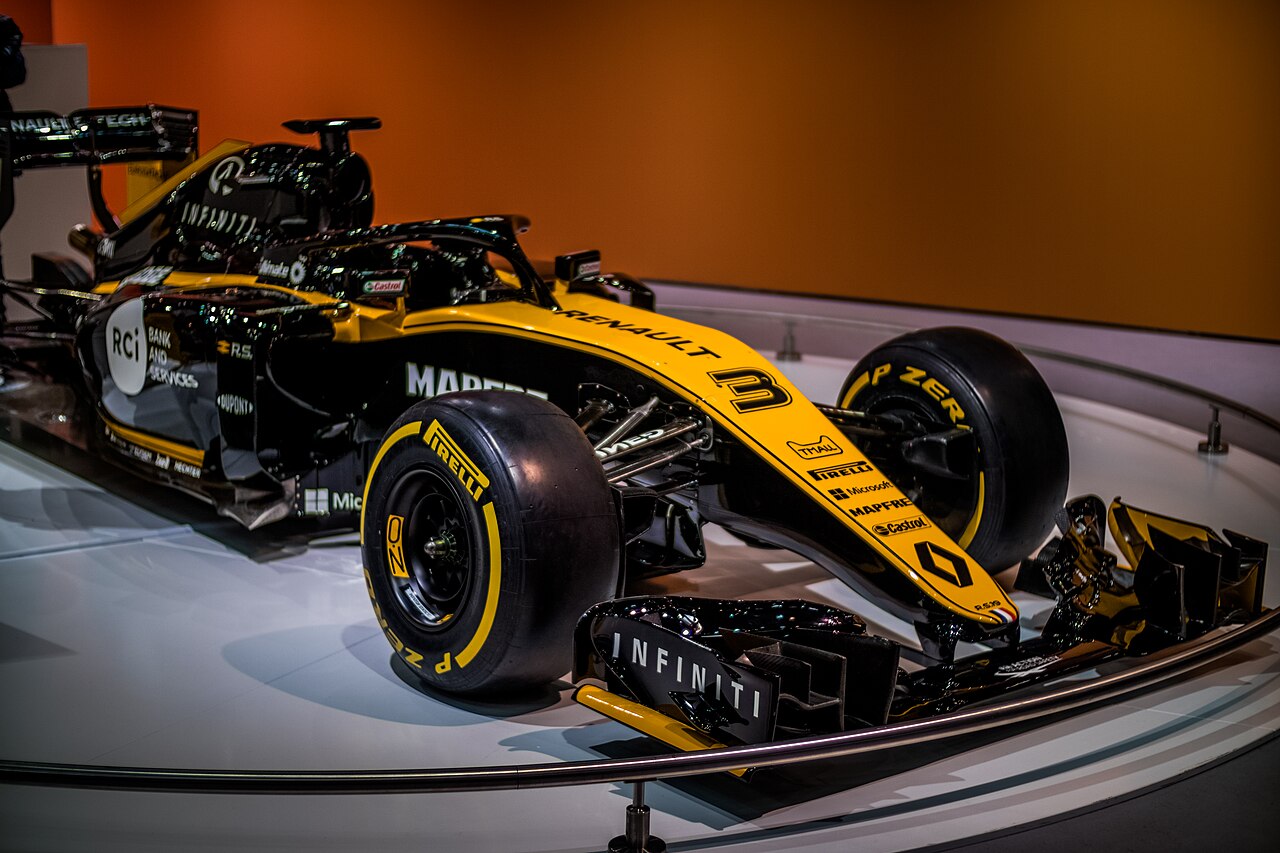
Motorsport 3D printing: parts made between test sessions
Ducts, brackets, aero test parts and fixtures from your model, turned round between test sessions. Urgent FDM dispatches in 1 calendar day.
What we do
Motorsport capability
Development parts and tooling made to the test calendar, from a single part to a race-weekend set.
Aero development parts
Wing elements, bargeboards, splitters and wind-tunnel models, iterated between sessions.
Brake and cooling ducts
SLS and carbon-filled ducts with the internal shape from the CFD model.
Carbon layup tooling
Moulds and tools for carbon fibre bodywork and ducting, finished to a layup surface.
Intakes and aspiration
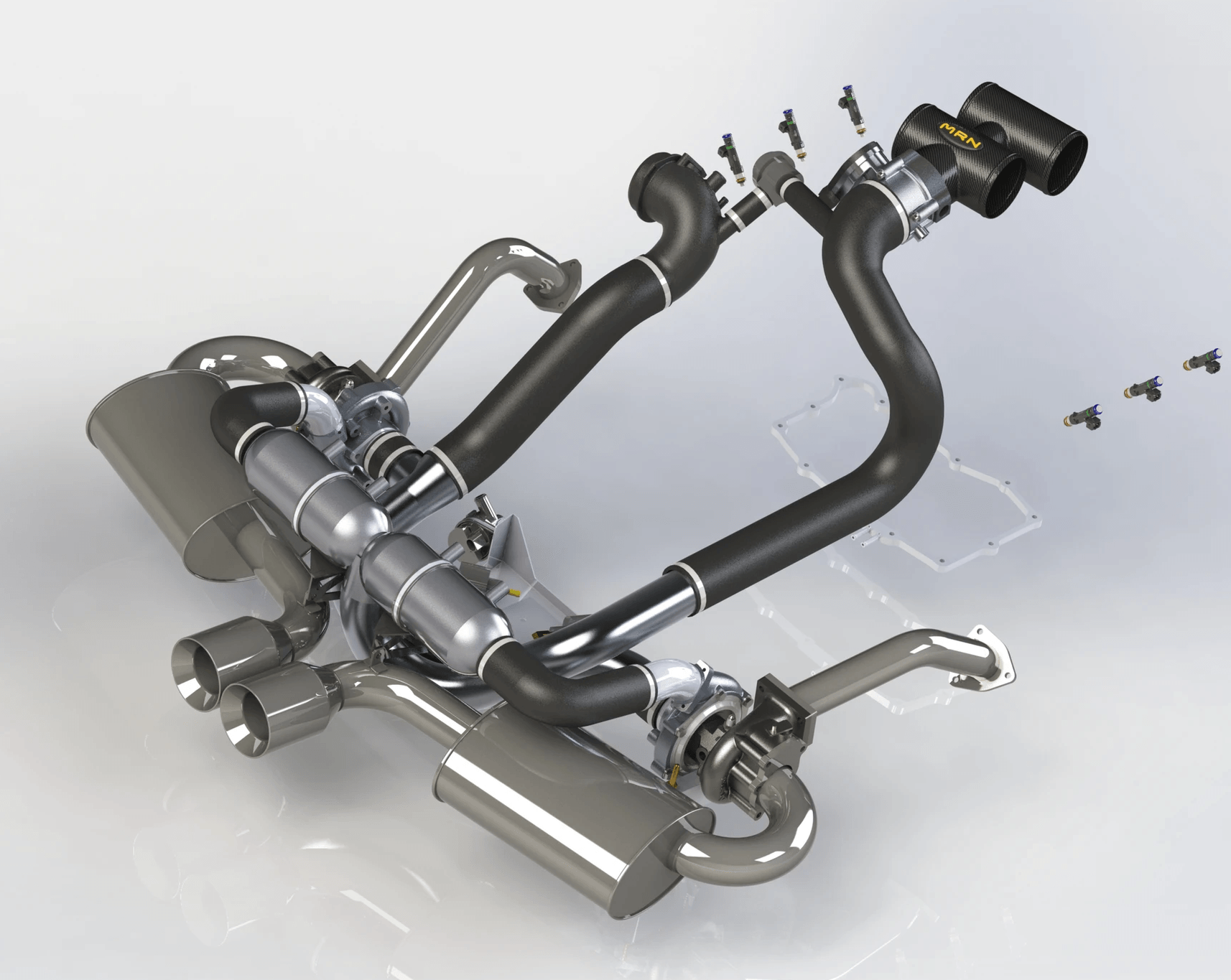
Air boxes, trumpets and plenums, including reverse-engineered parts.
Fixtures and race-day brackets
Jigs, brackets and mounts made to the weekend timetable.
Design and reverse engineering
Scan, model and improve existing parts, with drawings for production.
Lead time
Design loops per season window
A worked example of how many design loops fit in a test window at a 2-day and a 10-day turnaround.
Worked example over a 20 working day window (4 weeks)
Arithmetic only: window divided by turnaround, whole loops. It assumes each design change is made on the day the part arrives, so it is an upper limit.
Split of a one-day urgent FDM job.
Aero and ducting
Printed aero test parts before carbon tooling
Test shapes in plastic before committing to moulds.
Aero test parts
Splitter ends, mirror housings, brake ducts, floor edges and cooling-inlet shapes can be printed in rigid FDM or SLS nylon for track testing. Tuft, flow-vis and pressure-tapped test parts show where a CFD prediction holds up and where it does not.
Print the test shape as a set of separate parts so you can swap one feature and keep the rest. Bolt-on adaptors are cheaper than reprinting a whole car section.
Cooling and ducts
SLS PA12 ducts hold their shape in the heat around brakes and radiators; carbon-fibre nylon is stiffer for brackets that carry load. Printed ducts have no support inside the bore, so the internal shape matches the CFD geometry.
Specify the maximum local temperature. Brake-duct outlets and exhaust-side parts see temperatures plastic does not survive; we will tell you where to switch material.
Series regulations
Check each series' rules on printed parts before committing, as classes differ on materials and homologation. We supply parts to your drawing and record what was built.
Typical parts
Typical motorsport parts
- P-01
Brake and cooling ducts
SLS nylon, single-piece, mounted with printed or metal brackets.
SLS · PA12 - P-02
Aero test parts and wind-tunnel models
Rigid, smooth-finished parts for testing shapes. SLA for fine detail, FDM or SLS for larger sections.
SLA / SLS / FDM - P-03
Carbon-fibre nylon brackets
Stiff mounts for sensors, loom and ancillaries; lightweight, replaced when damaged.
FDM · CF-nylon - P-04
Intake components
Air boxes and trumpets, such as the Porsche turbo intake we reverse-engineered.
SLS · PA12 - P-05
Pit and garage fixtures
Jigs for alignment, setup plates and gauges.
FDM · ABS, PA12 - P-06
Cosmetic and cockpit parts
Switch panels, covers and dash housings; finished and painted.
FDM / SLA · ABS, resin
Case study
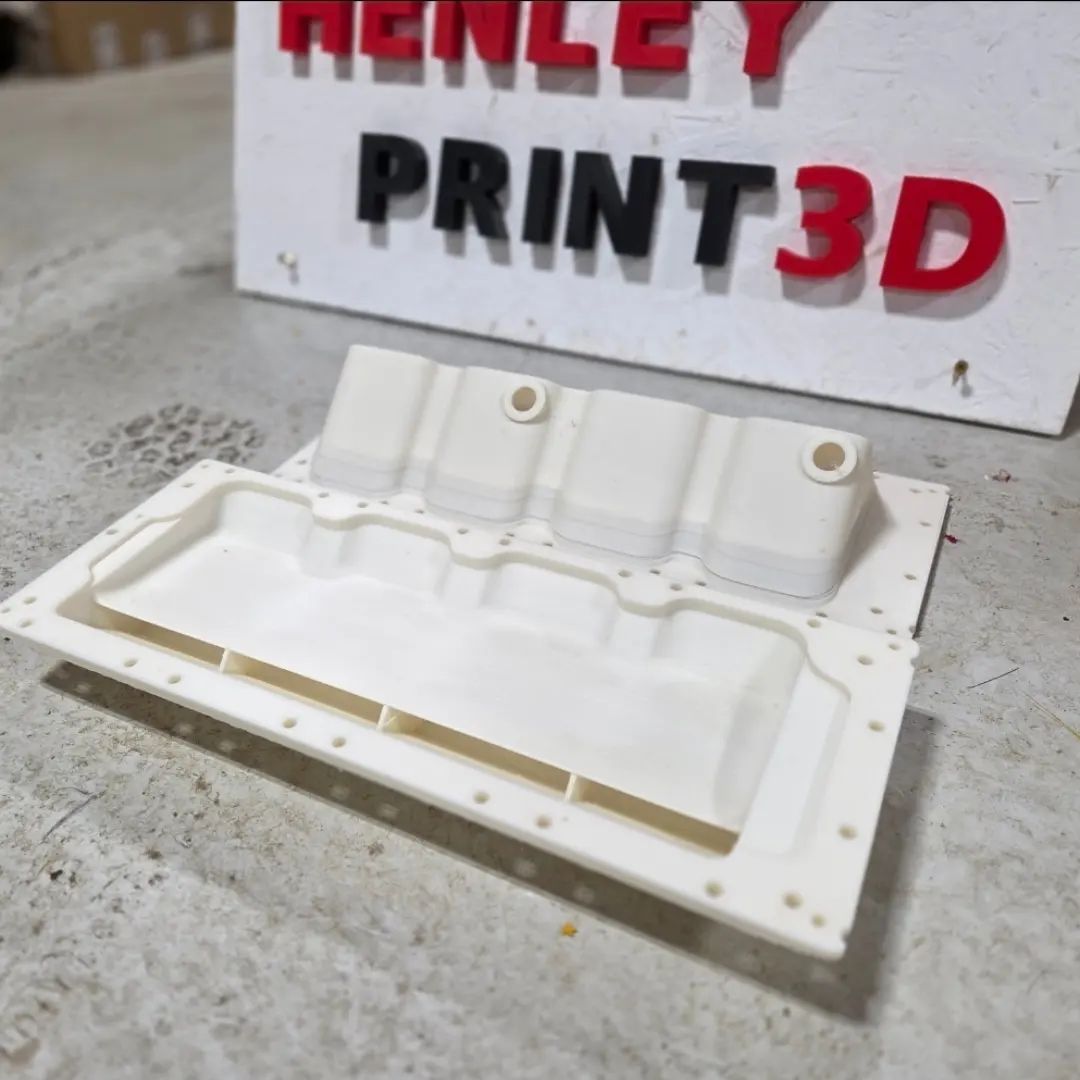
Motorsport oil sumps with cooling geometry
Power-unit oil sumps for a New Zealand motorsport firm, with geometry that improves oil cooling, printed on large-format high-temperature machines.
- Part
- Power-unit oil sump
- Process
- Large-format, high-temperature
- Customer
- New Zealand motorsport firm
Materials in the heat
Printed plastic temperature limits at the circuit
- SLS PA12 and carbon-fibre nylon are the working materials around radiators, intakes and cockpit.
- ABS and ASA soften at around 95 to 100 °C in the datasheets; keep them away from brakes and exhausts.
- PLA softens in a hot garage or a paddock in sun; use it only for fit checks.
- Anything that touches an exhaust, turbo or brake disc is a metal or ceramic job.
- Moisture changes nylon dimensions slightly; leave a little clearance on tight bores.
- Print a spare of every part that is hard to replace trackside.
Season cadence
Printed parts across a race season
Material and process by season phase.
| Phase | What you need | Our usual route |
|---|---|---|
| Pre-season design | Many shapes, cheap, to test ideas | FDM and SLA prototypes, batched together |
| Winter testing | Parts that survive running, replaced quickly | SLS PA12 and CF-nylon, urgent FDM |
| Race weekends | Repairs and quick changes between sessions | Urgent FDM from one calendar day |
| Mid-season updates | Validated upgrade parts in small batches | SLS batches, finished and recorded |
Use printed parts for fixtures, ducting, trim, brackets and development parts. Roll structures, suspension and other driver-safety structure stay in carbon or metal.
Case study
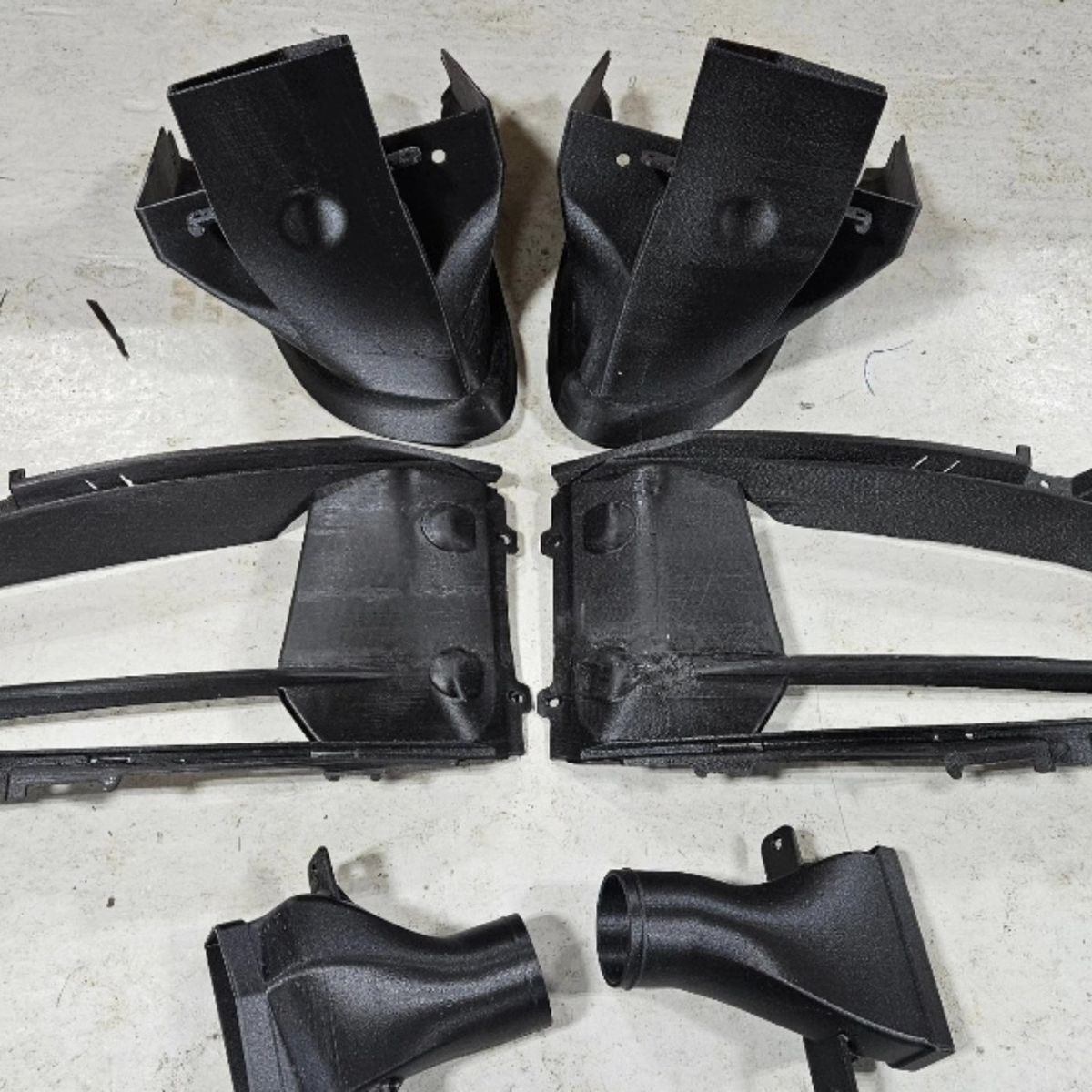
Lotus GT4 intake and fluid ducts
Air intake and fluid ducts in chopped carbon-fibre nylon, resistant to isopropyl alcohol, turned round quickly for track testing.
- Car
- Lotus GT4
- Material
- Carbon chopped-strand nylon
- Property
- Isopropyl resistant
FAQ
Frequently asked questions
How fast can you turn a part round?
Urgent FDM parts can ship in one calendar day. SLS and SLA take a few days depending on finishing. The quote states the dispatch date.
Which material for a brake duct?
SLS nylon PA12 is the usual choice for ducts near brakes; check the maximum local temperature first. Carbon-fibre nylon suits stiff brackets.
Can you print aero parts from CFD geometry?
Yes. Send STEP or STL. We will check printability, split large parts into sections and recommend a process.
Which motorsport parts suit 3D printing?
Ducting, brackets, fixtures, trim, enclosures and development parts. Roll structures, suspension and other driver-safety structure stay in carbon or metal.
Do you have capacity for a rush?
Tell us the deadline in the enquiry. We commit to a dispatch date in the quote.
Related
Related processes, materials and guides
Send the file and the deadline
Give us the date the part has to be on the car. We commit to a dispatch date in the quote.