
SLA, stereolithography
SLA 3D printing service: resin parts with 10 micron layers
Fine detail and smooth surfaces for visual and fit models.
Our UK SLA 3D printing service cures liquid photopolymer resin with UV light, in layers from 10 microns. It suits small, precise parts, clear parts and casting patterns.
- Tolerance±0.5% (min ±0.1 mm)
- Lead timeFrom 1 calendar day
- Build volumeEnquire about larger projects: we may be able to accommodate them. We also offer technologies beyond the four processes listed.350 × 250 × 250 mm
| Build volume | 350 × 250 × 250 mm | stated |
|---|---|---|
| Tolerance | ±0.5% (min ±0.1 mm) | stated |
| Resolution | From 10 microns | stated |
| Lead time | From 1 calendar day | stated |
| Minimum feature | 0.3 to 0.5 mm self-supporting | typical |
| Materials | Standard, tough, flexible, transparent, castable, biocompatible | process |
Larger builds are made at our Devon production site: send the drawings for a quote.
SLA process steps
- 01Review
An engineer checks orientation, trapped volumes and minimum feature size for the chosen resin.
- 02Prepare
The model is oriented and supported, then sliced for the build.
- 03Print
Resin is cured layer by layer with UV light, from 10 micron resolution.
- 04Wash and cure
Parts are washed of uncured resin and post-cured to reach their intended properties.
- 05Finish and inspect
Supports come off, the surface is finished, and parts are checked against the drawing.
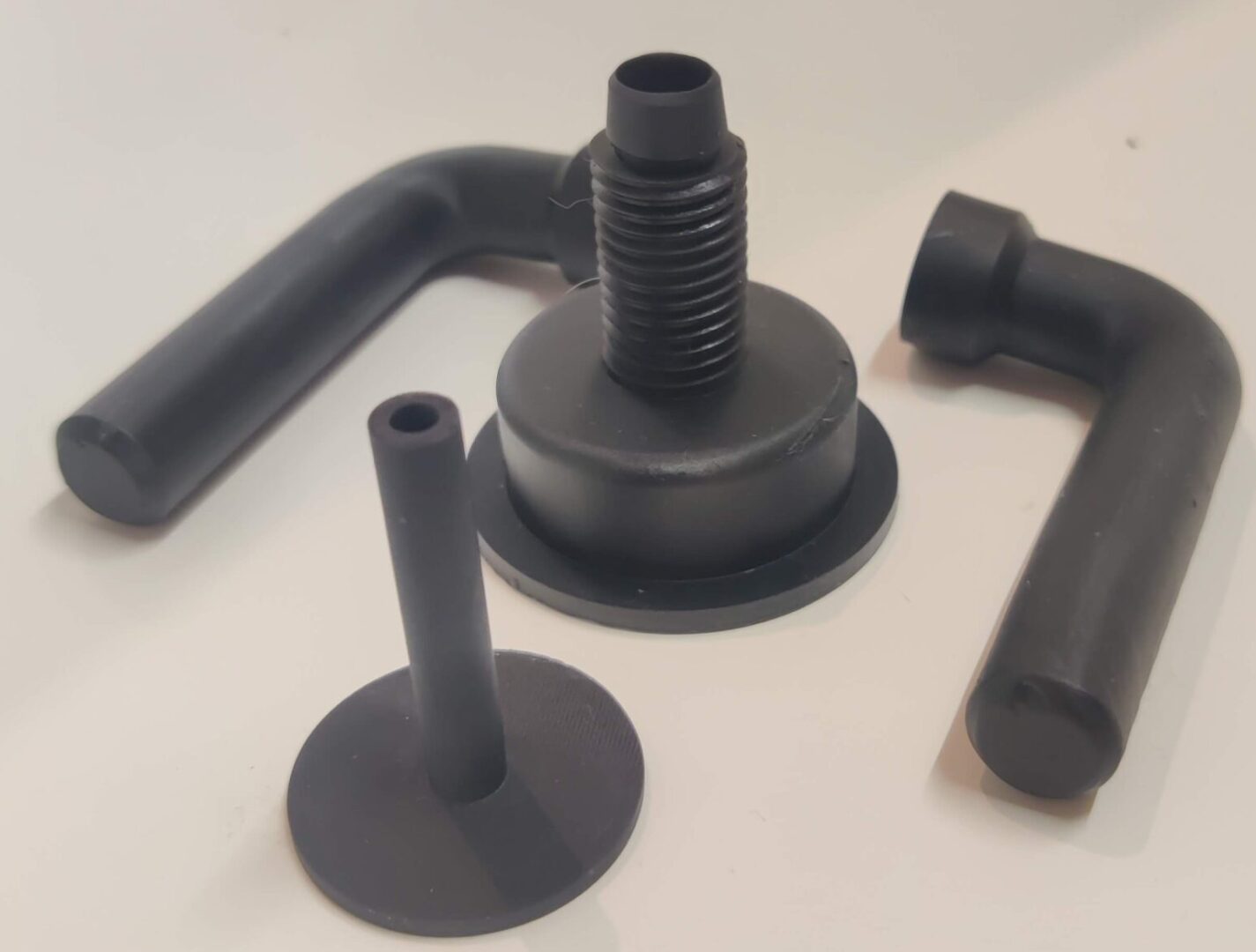
When to use SLA
What SLA suits
- Visual and fit-check prototypes with fine detail and a smooth surface
- Small, precise parts and intricate geometry
- Anatomical models, surgical guides and dental applications
- Clear parts, soft-touch parts and investment-casting patterns
- Master patterns for silicone moulding, and presentation models
Also consider
- Large, tough functional parts or fixtures: FDM, up to 1000 mm
- Sustained load or high temperature: SLS nylon
- Long-term outdoor use: FDM ASA
- Large numbers of simple, low-cost parts: FDM or SLS
SLA materials
Six resin families. Biocompatible grades are quoted per part, with suitability confirmed for each job.
| Material | Best for | Cost |
|---|---|---|
| Standard resinHigh-detail photopolymer | Small parts with the finest detail and a smooth surface | £££££Standard |
| Tough resinABS-like photopolymer | Functional prototypes that resist stress and strain | £££££On request |
| Flexible resinElastomeric photopolymer | Soft-touch parts, gaskets and seals | £££££Standard |
| Transparent resinClear photopolymer | Clear parts, light guides, visual flow models | £££££Standard |
| Castable resinBurn-out photopolymer | Patterns for investment casting, jewellery | £££££On request |
| Biocompatible resinSkin and mucosal contact grades | Anatomical models and guides. Grade confirmed per job. | £££££On request |
| More materials available. We can source most grades not listed here. Request a material | ||
Cost is relative: more £ means a higher price per part.
SLA design guidelines
Typical values. An engineer confirms them for your part.
| Feature | Key figure | Guideline |
|---|---|---|
| Minimum wall | 0.5 to 1.0 mm | Go thicker for load-bearing sections. |
| Minimum feature | 0.3 to 0.5 mm | Self-supporting, depending on resin and geometry. |
| Drain holes in hollow parts | Add at least two | They release uncured resin and relieve suction. |
| Clearance, mating parts | ±0.5%, min ±0.1 mm | Matches the stated tolerance. |
Rules of thumb
- Add drain holesHollow parts take at least two, so uncured resin drains out.
- Keep walls at 0.5 mm or moreWalls at this thickness print cleanly and stay stiff through finishing.
- Pick the resin for the jobStandard for detail, tough for function, clear for transparency, castable for patterns.
- Use resin parts indoorsChoose FDM ASA where the part needs long outdoor life.
SLA tolerance
Deviation at each nominal dimension: the larger of 0.5% of the dimension or ±0.1 mm.
Comparison with other processes at 100 mm
Calculated from our stated tolerances. Critical dimensions are flagged on the drawing and checked before dispatch.
SLA FAQ
How detailed can SLA parts be?
Resolution starts at 10 microns, with a smooth surface straight from the machine.
What is the SLA build volume?
350 × 250 × 250 mm. Larger parts can be split and bonded. Enquire about larger projects: we may be able to accommodate them.
How accurate is SLA?
±0.5% with a minimum of ±0.1 mm, the tightest minimum we quote.
Are SLA parts strong enough for functional use?
Tough and ABS-like resins suit functional prototypes, and standard resins suit visual models. We advise on resin per application.
Can SLA make clear or flexible parts?
Yes. Transparent and flexible resin families are available.
Can SLA be used for medical or dental parts?
Yes, for anatomical models and surgical guides. We confirm the grade and suitability for each job before building.
Companies that use HenleyPrint3D










Send CAD for an SLA quote
Upload a STEP or STL file for a price and lead time. An engineer confirms resin, tolerance and finish before we build. Uploads are secure and confidential.