Case study · Industrial
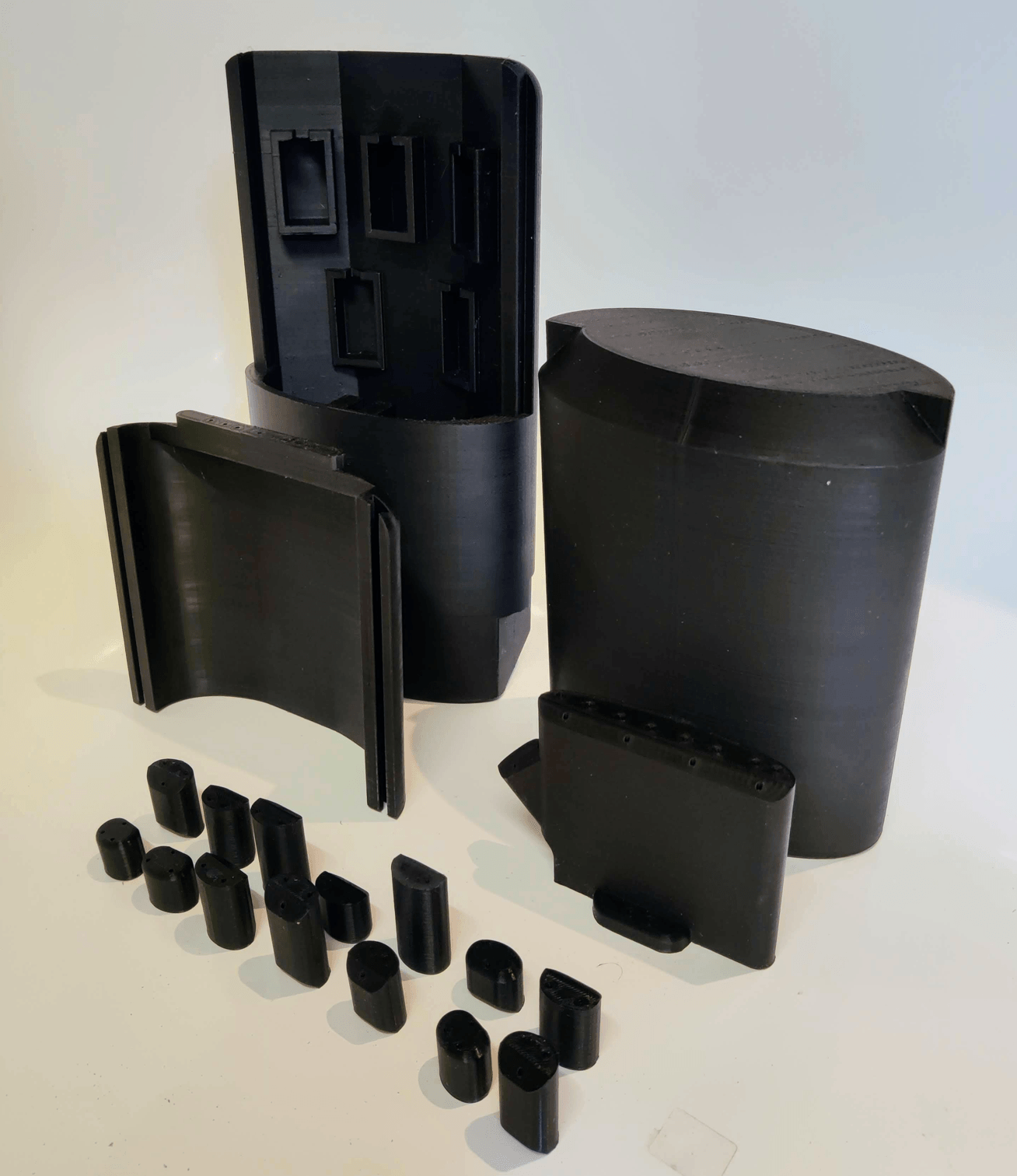
Ventilation ducting and mounts, 3D printed in FDM
Ducting and mounting hardware for an industrial ventilation system, redesigned to cut part count and leak paths and printed in FDM engineering thermoplastics.
Brief
- Airtight duct interfaces and sturdy mounting hardware.
- Withstand continuous airflow and mechanical load.
- Keep the part count low, because every joint is a possible leak.

Delivered
- Fewer parts and better airflow from the consolidated design.
- A clean finish across the series.
Approach
- 01
Refine the geometry
Assemblies were consolidated to cut part count and improve airflow.
- 02
Pick stable materials
Engineering thermoplastics, for long-term strength and dimensional stability.
- 03
Finish for installation
Each part was finished and inspected to the same ready-to-install standard.
Why this process and material
Why consolidate
Merging parts removes joints, seals and fasteners, and allows smoother internal transitions.
Why walls and orientation matter
Airtightness in extrusion printing depends on wall count, layer bonding and print orientation. We specify them with the geometry.
Why engineering thermoplastics
Continuous airflow and vibration load a part for years. Dimensionally stable materials resist creep at the mounting points.
Summary of the engineering approach
Every joint is a possible leak, so assemblies were consolidated: merging parts removes joints, seals and fasteners and allows smoother internal transitions. Airtightness in extrusion printing depends on wall count, layer bonding and print orientation, which were specified with the geometry. Engineering thermoplastics were used because continuous airflow and vibration load a part for years and dimensionally stable materials resist creep at the mounting points.
Questions about this project
Why consolidate the assemblies?
Merging parts removes joints, seals and fasteners, cutting part count and leak paths and improving airflow.
What makes a printed duct airtight?
In extrusion printing it depends on wall count, layer bonding and print orientation, specified together with the geometry.
Which materials were used?
Engineering thermoplastics, for long-term strength and dimensional stability.
Suggested next steps
Recommendations for taking the part further. None of this is completed work.
- Leak-test a sample assembly to record a validated airtightness figure.
- Heat-set threaded inserts at the mounting points for service access.
- Check whether any remaining joints can become integrated clips.