Case study · Cycling
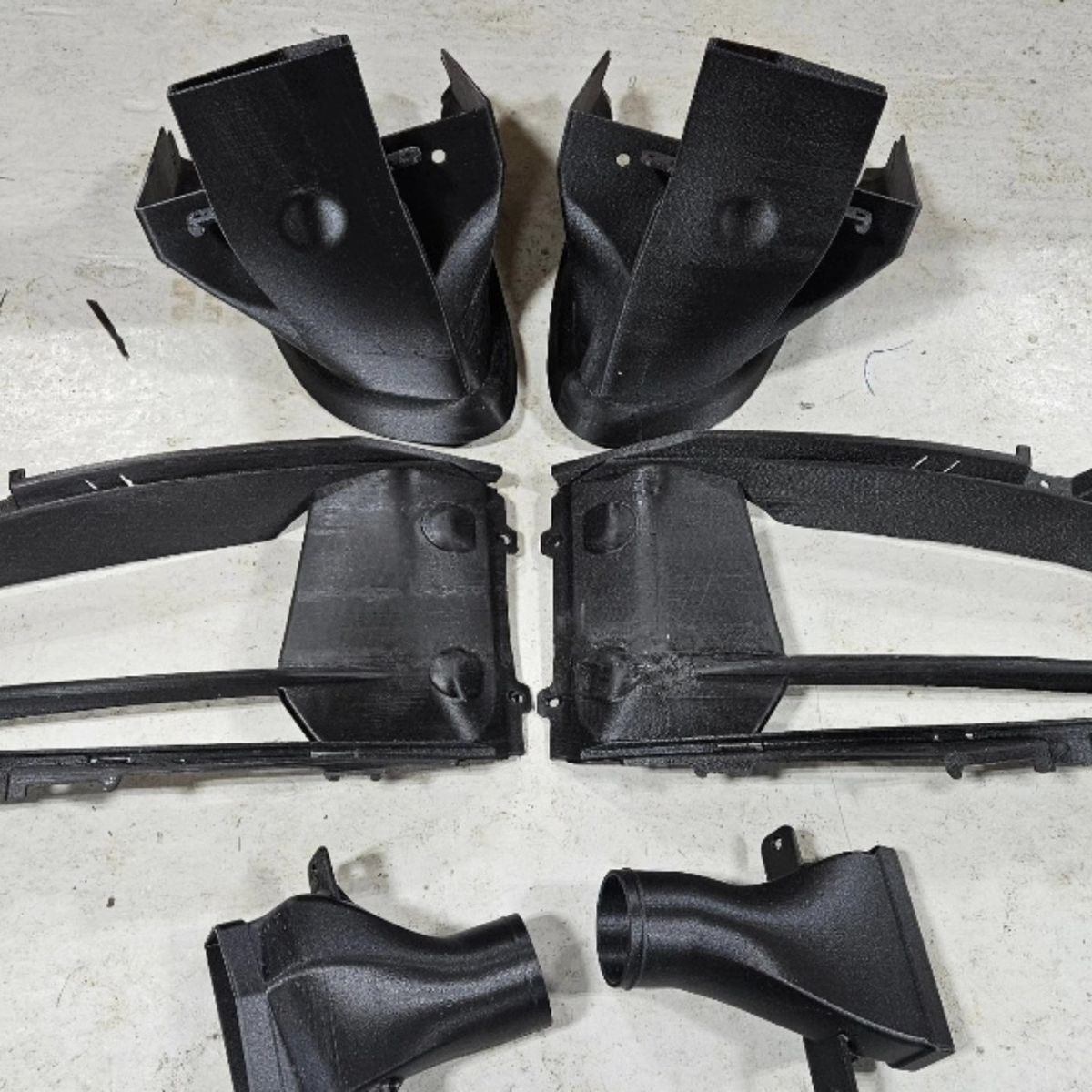
Lightweight FDM components for Brompton Bicycles
Lightweight FDM components for Brompton Bicycles, the folding bicycle maker, held to the same quality from the first part to the last.
Design for low mass
Material goes where the load path needs it. Ribs, wall thickness and orientation do most of the saving.
Select by mechanical property
Materials were chosen for strength and finish.
Control the run
Process parameters stay fixed, so the last part matches the first.
Deliver to schedule
Parts arrived in time for production.
Challenge
- Cut weight without losing strength.
- Meet the brand's standard for quality and repeatability.
- Keep every part in the run consistent, because bicycle parts are judged one at a time.
Result
- Components delivered to Brompton's production requirements.
- Repeatable quality across the run.
Why this process and material
Low mass with enough stiffness
In an additive part, geometry saves mass as much as material does. Both are specified together.
Material selection
Materials were compared on stiffness, toughness and surface finish.
Repeatability
Repeatability comes from locked parameters, recorded material lots and inspection against a stated tolerance.
Summary of the engineering approach
In an additive part, geometry saves mass as much as material does, so ribs, wall thickness and orientation were specified together with the material. Bicycle parts are judged one at a time, so process parameters were kept fixed to make the last part match the first. This page covers the production components. A separate write-up covers the transparent-resin SLA pedal prototypes.
Questions about this project
What did HenleyPrint3D make for Brompton Bicycles?
Lightweight components made to Brompton's production requirements, with repeatable quality across the run. A separate project covered transparent-resin SLA prototype pedals.
How was low mass achieved?
Material goes where the load path needs it. Ribs, wall thickness and orientation do most of the saving.
How was quality kept consistent?
Process parameters stayed fixed, so the last part matches the first.
Suggested next steps
Recommendations for taking the part further. None of this is completed work.
- A standing specification (material, orientation, finish, inspection points) so reorders reproduce exactly.
- Generative design on the highest-value part, to put a number on further mass saving.
- A short validation programme comparing printed parts with the current design.