
Industries / Consumer product design
3D printed consumer product prototypes, from appearance models to short runs
Prototypes at three levels (looks-like, works-like and production-like) in SLA, PolyJet, FDM and SLS, plus short runs of 10 to 200 parts with no tooling. Mutual NDA on request before you share a file.
What we do
Consumer product design capability
Prototypes at each stage of development, and short runs that get a product to market before tooling is justified.
Appearance models
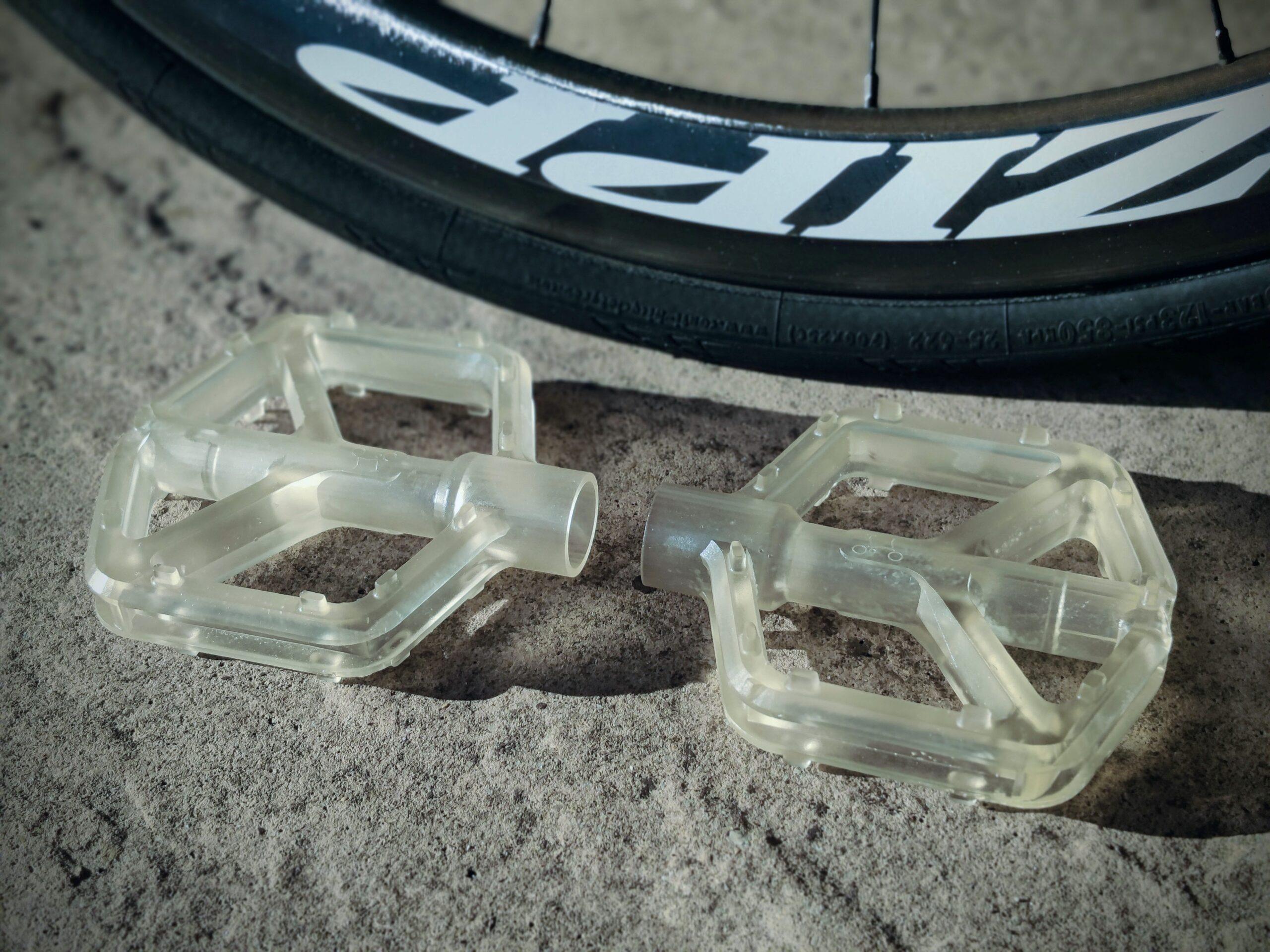
Looks-like prototypes finished and painted to review quality.
Working prototypes
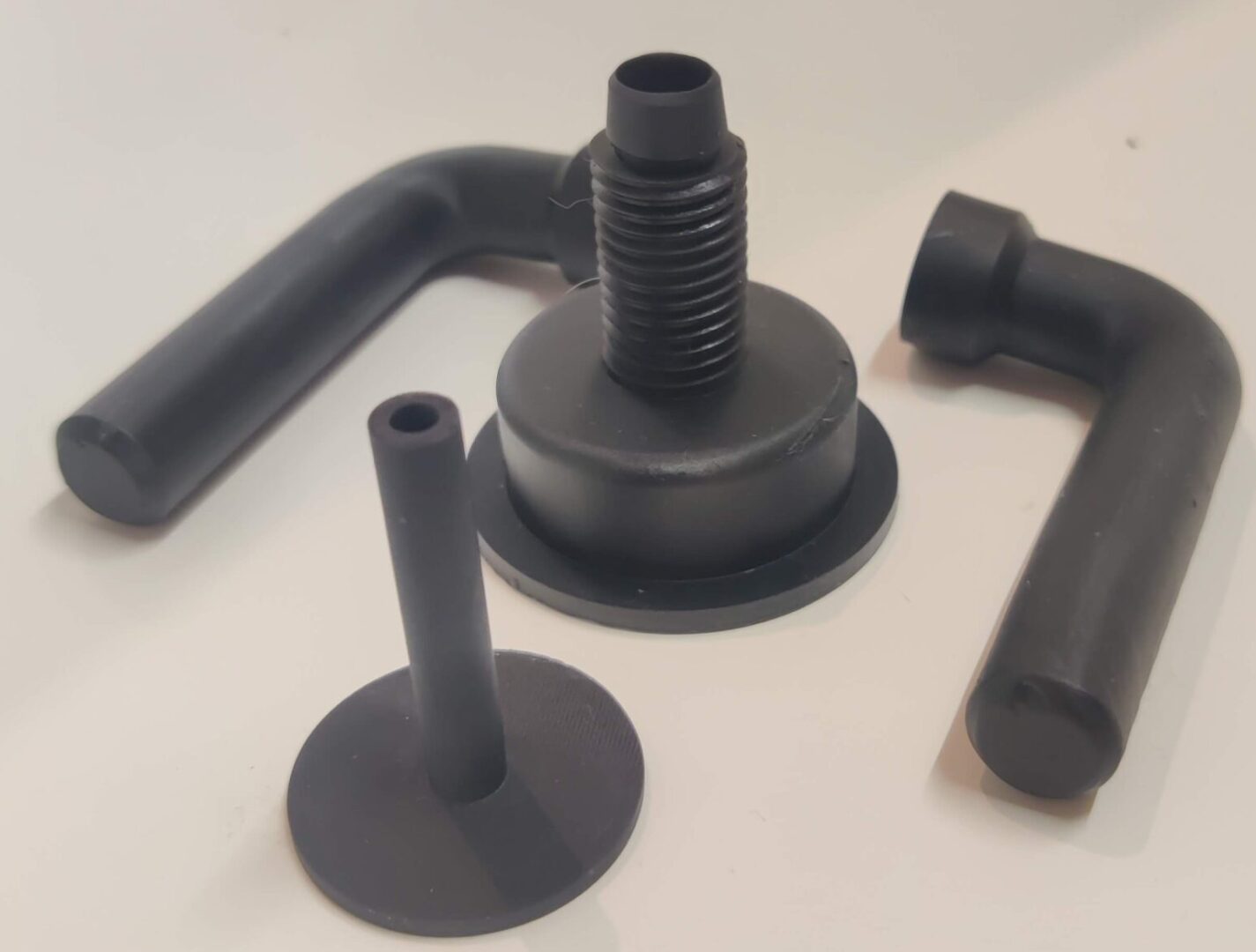
Works-like models with snap fits, hinges and moving parts for testing.
Short-run production
Tens to hundreds of parts without tooling, with consistent finish.
Mould masters and patterns
Masters for silicone moulding and casting.
Finishing and colour
Painting, dyeing, vapour smoothing and plating to match the brief.
Design and DFM
CAD, drawings and design for manufacture, including the move to tooling.
Prototype fidelity
Three prototype levels
- Looks-like: shape, scale, colour and finish. Used for design reviews and stakeholder sign-off. SLA or PolyJet, sanded and painted.
- Works-like: moving parts, snap-fits, hinges, loads. Used to find out what breaks. FDM or SLS nylon, with inserts and fasteners where a real product would have them.
- Production-like: the final material and the final geometry. Used for pilot runs and certification samples. SLS batches, injection-moulded samples via a partner, or finished PolyJet.
Process by fidelity
Which process fits which stage
| Stage | Process | Material | Typical lead time | What it tells you |
|---|---|---|---|---|
| Looks-like | SLA | Rigid resin; castable or clear on request | A few calendar days with finishing | Does the form work in the hand and on a shelf? |
| Looks-like, colour | PolyJet | Multi-material photopolymer | A few calendar days | Can we show soft-touch and hard regions together? |
| Works-like | FDM | ABS, PETG, nylon, TPU | From 1 calendar day | Do the mechanism, snaps and hinges work? |
| Works-like, tough | SLS | Nylon PA12 | A few calendar days | Will the part survive drop and wear tests? |
| Production-like, small batch | SLS or FDM batches | PA12, ABS, ASA | Depends on quantity; stated in the quote | How does the product behave at tens or hundreds? |
Small batch
Short-run printing versus moulding
Moulding is cheaper per part at volume and costs more up front. The crossover depends on the part; the quote shows it.
10 to 200 parts
For crowdfunding rewards, retail trials, beta units and pilot lines, printing avoids a mould that may be scrapped when the design changes. Parts stay consistent because every build is recorded and repeated.
Design for the run
Consolidate parts, remove fasteners, and orient features to print without support. Where the product will later be moulded, keep draft angles and uniform walls in the model so moving to moulding needs no redesign.
What we advise against
We advise against scaling FDM to a thousand identical parts because the first hundred sold. At that volume, we will help you cost a mould instead.
Finishing
Finishing a looks-like model
Finish is a major cost driver, so decide the level early.
Sanding and priming
Layer lines disappear with sanding and filler primer. SLA parts need less work than FDM; a primed SLA model is ready for paint after light sanding. Budget extra time for large flat panels, which show every defect.
Sand-blasting
A sand-blasted surface gives a uniform matte texture that hides layer lines on nylon and ABS without filler. It suits grips, housings and anything that should feel like moulded plastic.
Inserts and hardware
Fit threaded inserts, magnets and metal fasteners the way production will. A prototype that screws together with real fasteners tells you far more about assembly than one that glues.
Colour and transparency
PolyJet and clear SLA resin give colour and transparency, useful for light pipes, windows and display units. Colour-match to a reference is by eye, not to a Pantone value; say if the match is critical.
Case study
Brompton Bicycles
Lightweight FDM components for Brompton Bicycles, consistent from first part to last.
Typical parts
Typical consumer product parts
- P-01
Appearance models
Sanded, primed and painted SLA models for investor or retail presentation.
SLA · rigid resin - P-02
Snap-fit housings
Enclosures with snap and screw features for functional testing.
FDM / SLS · ABS, PA12 - P-03
Soft-touch grips and buttons
TPU or PolyJet rubber-like regions to test feel.
FDM · TPU / PolyJet - P-04
Packaging inserts and trays
Fit-checked inserts for pilot packing.
FDM · PETG - P-05
Short-run end-use parts
Batches of 10 to 200 that go straight to customers.
SLS · PA12
FAQ
Frequently asked questions
How accurate are your prototypes?
Typical FDM accuracy is around ±0.5%. SLA and SLS hold tighter on small features. We state the achievable tolerance before we quote.
Can you paint and finish a prototype?
Yes. We sand, sand-blast and prepare parts for painting. Tell us the finish at enquiry.
How many parts can you make?
From one part to thousands. For larger volumes, tell us the quantity and we will advise whether moulding is cheaper.
Will my design be kept confidential?
We will sign a mutual NDA before you share a file.
Can you help with the design itself?
Yes. Our design service produces 3D CAD models from sketches or reference parts, and an engineer reviews every model for printability.
Related
Related processes, materials and guides
Tell us what the prototype must test
Say whether it tests looks, function or production feel. We choose the lowest-cost process for that test.