
Industries / Automotive
Automotive 3D printing, with materials matched to each temperature zone
Intake parts, jigs, fixtures and pre-production batches made by SLS and FDM additive manufacturing. Material is chosen for the zone the part sits in: cabin, under-bonnet or hot side. Send the model and the zone for a quote.
- FDM, SLSUsual processes for functional automotive parts
- 1 dayFastest FDM dispatch
- 20 to 200Pre-production batch size we are often asked for
What we do
Automotive capability
Development parts, tooling and short-run components for vehicle programmes, from first concept to pre-production.
Track-specific aerodynamics
Aero devices, ducts and splitters tuned to a circuit and printed in days for the next session.
Custom intake and aspiration
Air boxes, trumpets and intake runners shaped by the airflow, including reverse-engineered production parts.
Development and low-volume tooling
Fixtures, moulds and layup tools for development and low-volume builds.
Suspension prototypes
Generatively designed uprights, wishbones and mounts for fit and function testing before metal is cut.
Carbon composite layup tooling
Printed moulds for carbon and glass fibre panels, ducts and body parts.
Concept and heritage vehicles
Interior, trim and electrification brackets for concept cars and restorations.
Process and material fit
Material temperature limits by vehicle zone
Heat deflection temperature at 0.45 MPa is the first screen. Treat it as a ceiling for loaded parts.
| Material and process | HDT at 0.45 MPa, approx. (°C) | Cabin to 85 | Under-bonnet ambient to 125 | Hot side to 175 | Note |
|---|---|---|---|---|---|
| PLAFDM | 55 | Not suited | Not suited | Not suited | Fit checks and visual models only. Softens in a parked car. |
| PETGFDM | 70 | Not suited | Not suited | Not suited | Tough and chemical resistant. Unsuitable for a hot cabin. |
| ABSFDM | 95 | Fits | Not suited | Not suited | Cabin trim, brackets, jigs. Not for engine bays. |
| ASAFDM | 95 | Fits | Not suited | Not suited | ABS-like with UV stability for exterior fit checks. |
| Carbon-fibre nylonFDM | 150 | Fits | Fits | Not suited | Stiff and copes with engine-bay temperatures; check the specific grade. |
| Nylon PA12SLS | 160 | Fits | Fits | Not suited | Intake runners, ducts, clips, covers. Absorbs moisture, so check dimensions in service. |
HDT figures are approximate typical datasheet values for the material family, not guarantees; they differ by grade and by print orientation. For a regulated or safety-related part, test a sample in the real environment. Nothing above is rated for exhaust manifold or turbo housing contact.
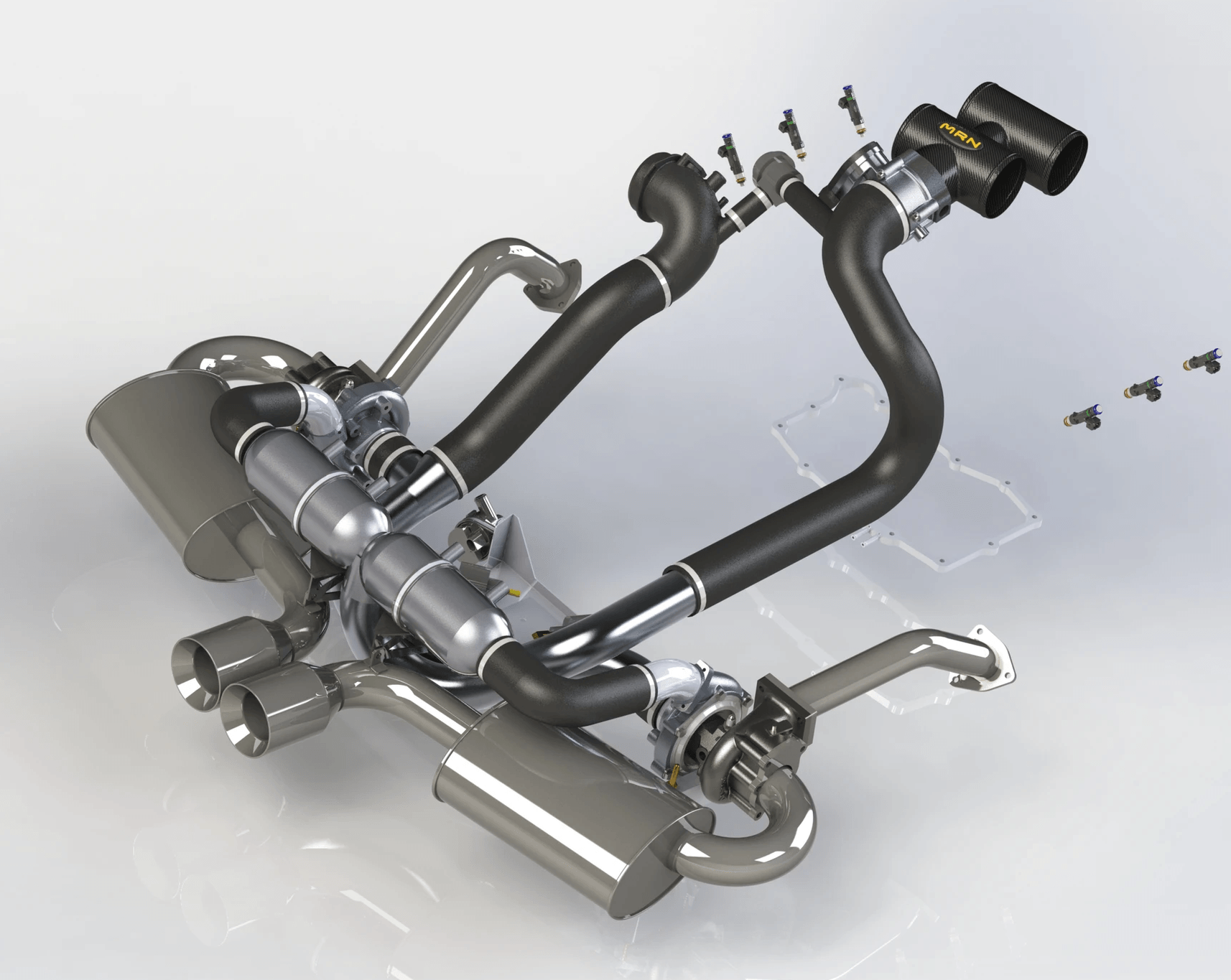
Intake and ducting
Intake components
Reverse-engineered twin-outlet air intake, printed in SLS PA12 and carbon-fibre nylon. These processes suit hollow, organic shapes, provided the part sits on the cold side of the turbo.
- Digitise the original, then re-model mounting and sealing faces exactly and clean up everything else for additive.
- Keep the intake on the cold side of the turbocharger; compressor outlet temperatures climb quickly and need a different material.
- Print walls thick enough to resist collapse at the pressure of the intake tract.
- Leave sealing faces slightly proud and finish them to size.
Jigs, fixtures and pre-production
Production support and bridge batches
Most of our automotive work by volume is jigs, fixtures and pre-production parts.
Jigs and fixtures
Assembly jigs, drilling guides, check gauges, paint-masking templates and end-of-line fixtures are used for weeks, not years. Printing them in nylon or ABS takes days, costs a fraction of a machined aluminium fixture, and a replacement can be made as soon as the part drawing changes.
Add hardened bushes for drilled holes and threaded inserts for repeated clamping. Plastic wears at locating faces, so keep those as replaceable inserts.
Pre-production and validation parts
Before tooling is cut, test parts in the intended material. An SLS nylon part has different stiffness and creep behaviour from a moulded part, so use it to check fit, assembly and function, then plan on moulded samples for final validation.
A batch of 20 to 200 identical printed parts is often the right bridge between a prototype and the first injection-moulded run.
Classic and low-volume vehicles
Where a plastic part is out of production, reverse-engineering and printing a small batch avoids a tooling cost that never pays back. The same approach was used on our electrified vintage car work.
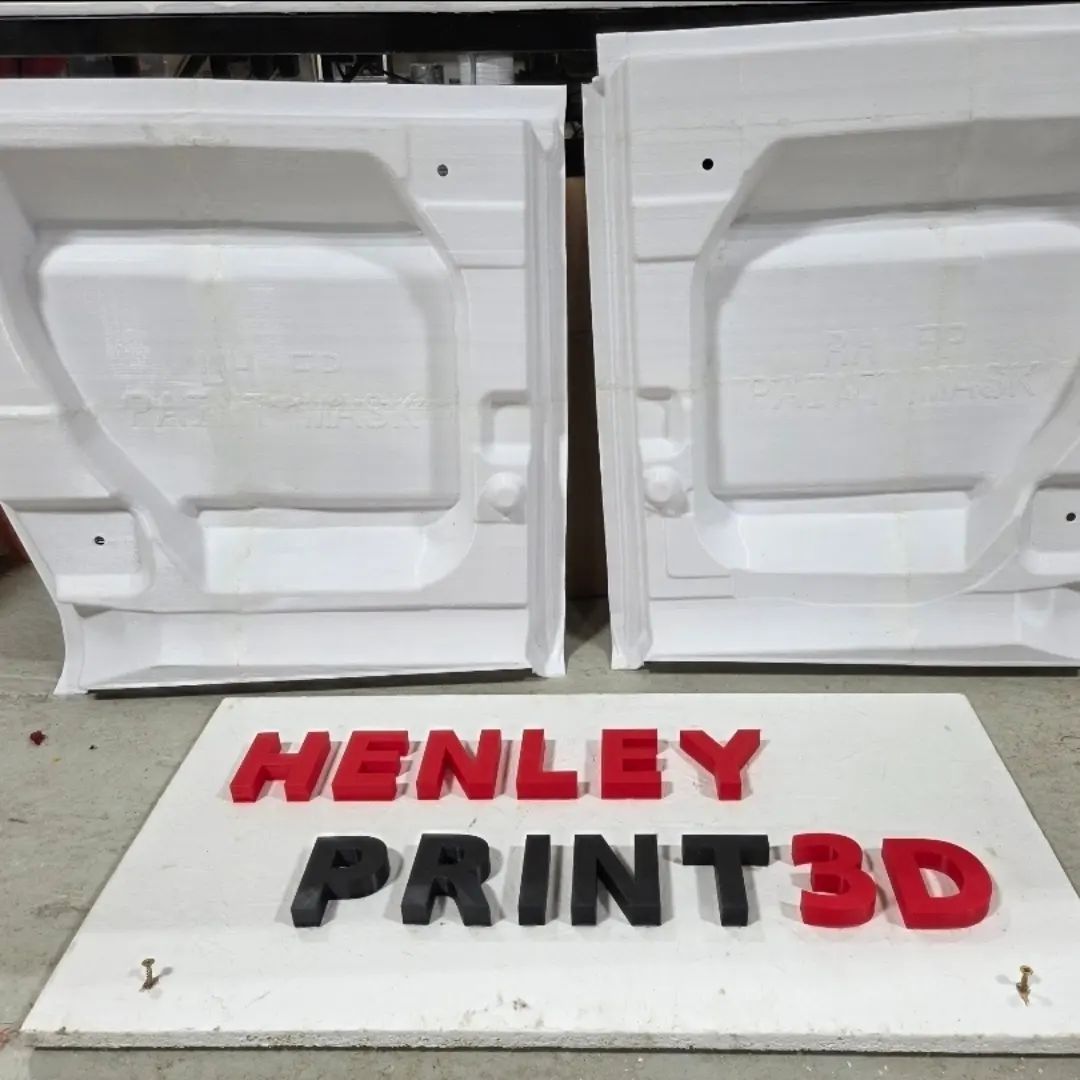
Case study
Paint masks for a US automotive plant
Extra-large high-temperature components for automated paint spraying at a large US automotive manufacturer, shipped overnight over 5,500 miles.
- Use
- Automated paint spraying
- Material
- High-temperature material
- Delivery
- Overnight, 5,500 miles
Typical parts
Typical automotive parts
- P-01
Intake runners and air boxes
SLS PA12, finished at the sealing faces.
SLS · PA12 - P-02
Cabin brackets, trim clips and covers
FDM ABS or ASA for fit checks, SLS where parts must survive a hot cabin.
FDM / SLS · ABS, ASA, PA12 - P-03
Assembly and check fixtures
Nylon or ABS with metal bushes at wear points.
FDM · nylon, ABS - P-04
Wiring and sensor mounts
Carbon-fibre nylon where under-bonnet temperatures apply.
FDM · CF-nylon - P-05
Gaskets, seals and grommets (prototype)
Printed TPU for fit checks; production seals are moulded.
FDM · TPU
FAQ
Frequently asked questions
Can printed parts go under the bonnet?
Yes, in the right material and the right place. SLS PA12 and carbon-fibre nylon cope with typical under-bonnet ambient temperatures; for parts at an exhaust manifold or turbo housing, tell us the temperature and we will recommend a heat-resistant route.
Are printed parts good enough for pre-production validation?
For fit, assembly and functional checks, yes. Final validation of a moulded production part should use moulded samples, because printed and moulded parts differ in stiffness and creep.
Which quality standards do you work to?
We are working towards ISO 9001 and keep controlled revisions and recorded builds. We supply prototype, tooling and low-volume parts, and share build records for your own PPAP file.
How fast can you make a jig?
Simple FDM jigs can ship in one calendar day; larger or finished jigs take a few days. The quote states the date.
Can you reverse-engineer an existing part?
Yes. We digitise the part, re-model it with exact mating faces and print a trial. See our Porsche intake and vintage car case studies.
Related
Related processes, materials and guides
Send the part location and temperature
Send the model with the location in the vehicle and the highest temperature it will see. We pick the material from that.