
Industries / Energy and nuclear
3D printed replacement parts, fixtures and mock-ups for energy and nuclear plant
For obsolete plastic parts with no supplier, we measure the worn part, rebuild it in CAD, print a fit check and build a small batch by FDM or SLS. We also make fixtures, mock-ups and R&D housings for non-safety, low-dose and research use. Send the part or photographs for a quote.
What we do
Energy and nuclear capability
Replacement parts, tooling and mock-ups for plant and projects, each supplied with a build record.
Replacement plastic parts
Obsolete or worn components reverse-engineered and rebuilt in suitable polymers.
Plant mock-ups
Full-size and scale models to plan access, installation and maintenance.
Tooling and fixtures
Handling aids, jigs and inspection fixtures, made to the site requirement.
Material coupons for testing
Printed coupons for customer-run radiation, thermal and chemical testing.
Reverse engineering
Scanning and modelling of parts with no drawing.
Spares batches
Small runs of consumable parts with traceable build records.
Obsolete-part workflow
Obsolete-part replacement process
For parts with no drawing and no supplier.
- 01
Receive the part and the duty
Send the worn or broken part with its operating environment: temperature, chemicals, mechanical load, radiation dose if known, and expected life. Photograph the part in place and mark the mating faces.
- 02
Measure and reverse-engineer
We take dimensions of the part, reconstruct a CAD model and mark each dimension as measured, inferred or assumed. A worn surface is corrected to the nominal fit, not copied.
- 03
Select material against the environment
Heat, oil and radiation narrow the choice quickly. Nylon PA12, ABS, ASA, PETG and carbon-fibre filled nylon are the usual candidates; the radiation table below shows where each one stops.
- 04
Print a test article and check fit
A first article in the chosen material is checked on the real assembly or a gauge. If it does not fit, the model is corrected and the part reprinted until it does.
- 05
Document and batch
A build record ties the batch to the model revision, material and settings. Repeat orders use the same record, which matters when a part is needed again in two years.
Radiation and environment
How printed plastics behave in radiation
Radiation embrittles, discolours or softens plastics depending on polymer and dose. Use the table as a starting point for your own materials assessment.
| Material | General radiation behaviour | Where it is used | Our guidance |
|---|---|---|---|
| Nylon PA12 (SLS/FDM) | Moderate resistance at low doses; embrittles with cumulative dose, and oxidises in air | Fixtures, covers and guides in low-dose areas | Low-dose, short-life use. |
| ABS, ASA | Poor; yellows and becomes brittle at modest doses | Mock-ups, non-irradiated fixtures | Mock-ups and cold areas. |
| PETG | Moderate; embrittles with cumulative dose | Guards and covers outside the radiation zone | Match dose to supplier data. |
| Carbon-fibre nylon | Fibre helps stiffness; polymer matrix degrades as nylon does | Stiff supports | Rate as nylon for radiation. |
| Photopolymer resins (SLA) | Cross-linked, tend to embrittle further; some yellow with UV | Mock-ups, training models | Mock-ups and training models. |
Material for a part in a radiation field is chosen with supplier data and your plant's engineering authority. We supply parts for non-safety, low-dose and R&D use, with a build record for each.
Documentation
Documentation supplied with each order
What each record shows, and what it does not.
- Build record
Machine, material, process settings and model revision for each batch, kept so a repeat order matches the first.
Our approach. Provided on every order. This is evidence of how a part was made, not of its suitability.
- Dimensional report
Measurements of the features you mark against the model or drawing.
Our approach. Provided for the features you specify.
- Material datasheet
The supplier's published properties for the grade used.
Our approach. We share the datasheet, so your engineering authority can match the grade to the dose.
- Nuclear quality assurance (for example ISO 19443)
A quality management standard for organisations supplying items important to nuclear safety.
Our approach. We are working towards ISO 9001 and hold no nuclear QA certification: controlled revisions and recorded builds, applied to non-safety, low-dose and R&D parts.
Typical parts
Typical energy and nuclear parts
- P-01
Obsolete plastic spares
Knobs, covers, bushes, clips, bezels and guides for plant that is no longer sold new.
FDM / SLS · PA12, ABS - P-02
Maintenance jigs and fixtures
Alignment jigs, lifting guides and tool holders used during outages.
FDM · nylon, ABS - P-03
Full-scale mock-ups
Plant-layout and access mock-ups, to rehearse an operation before it happens in the real space.
FDM · PLA, ABS - P-04
Ducting and housings
Cooling and ventilation parts for energy projects; see our ventilation system work.
SLS / FDM - P-05
Marine and offshore enclosures
Housings for sensors and electronics in damp environments; test ingress before use.
SLS · PA12 + gasket
Case study
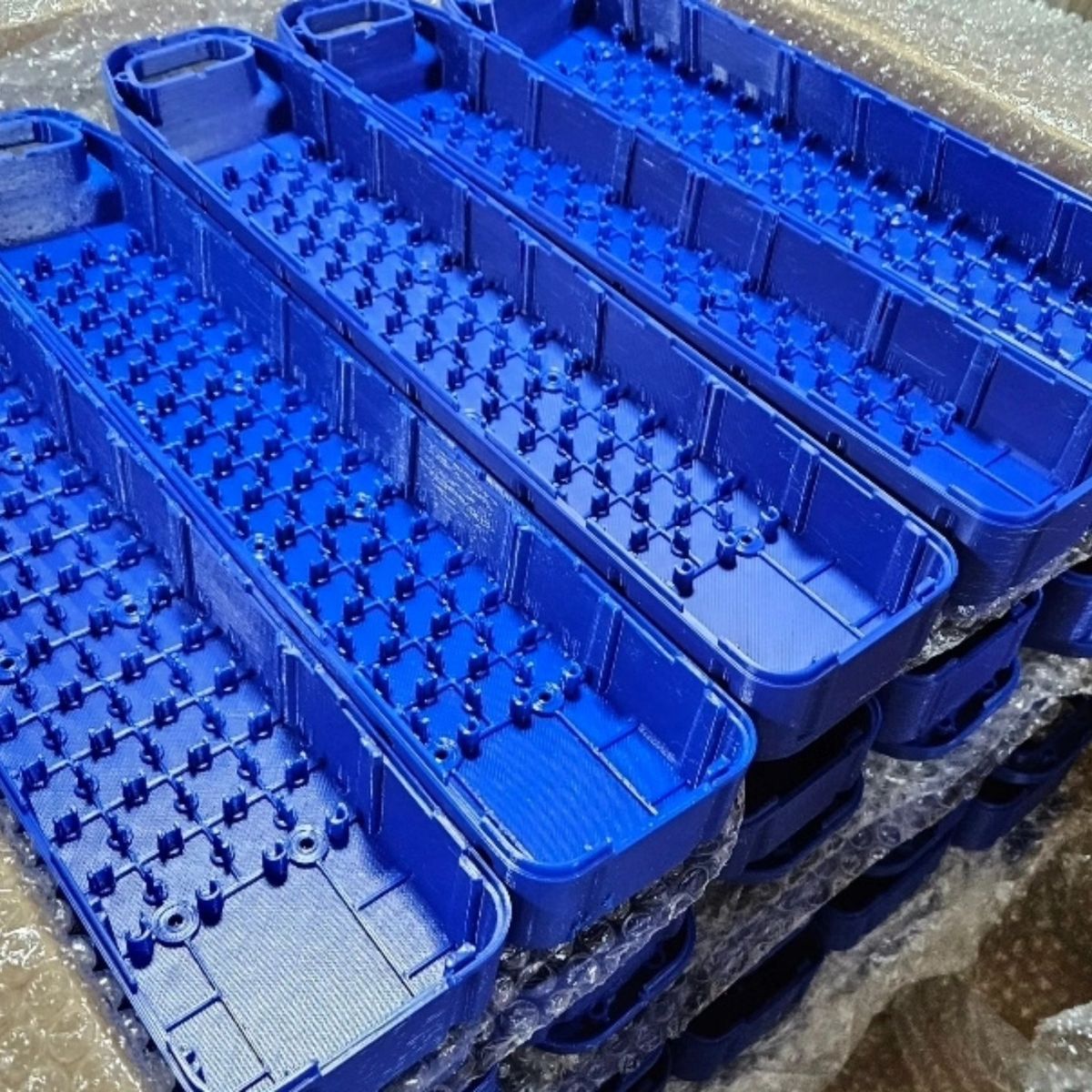
Battery storage parts for solar
Custom components for a photovoltaic battery storage system for a Swiss client, delivered on a short lead time.
- Process
- FDM
- Use
- Photovoltaic battery storage
- Customer
- Swiss client
Case study
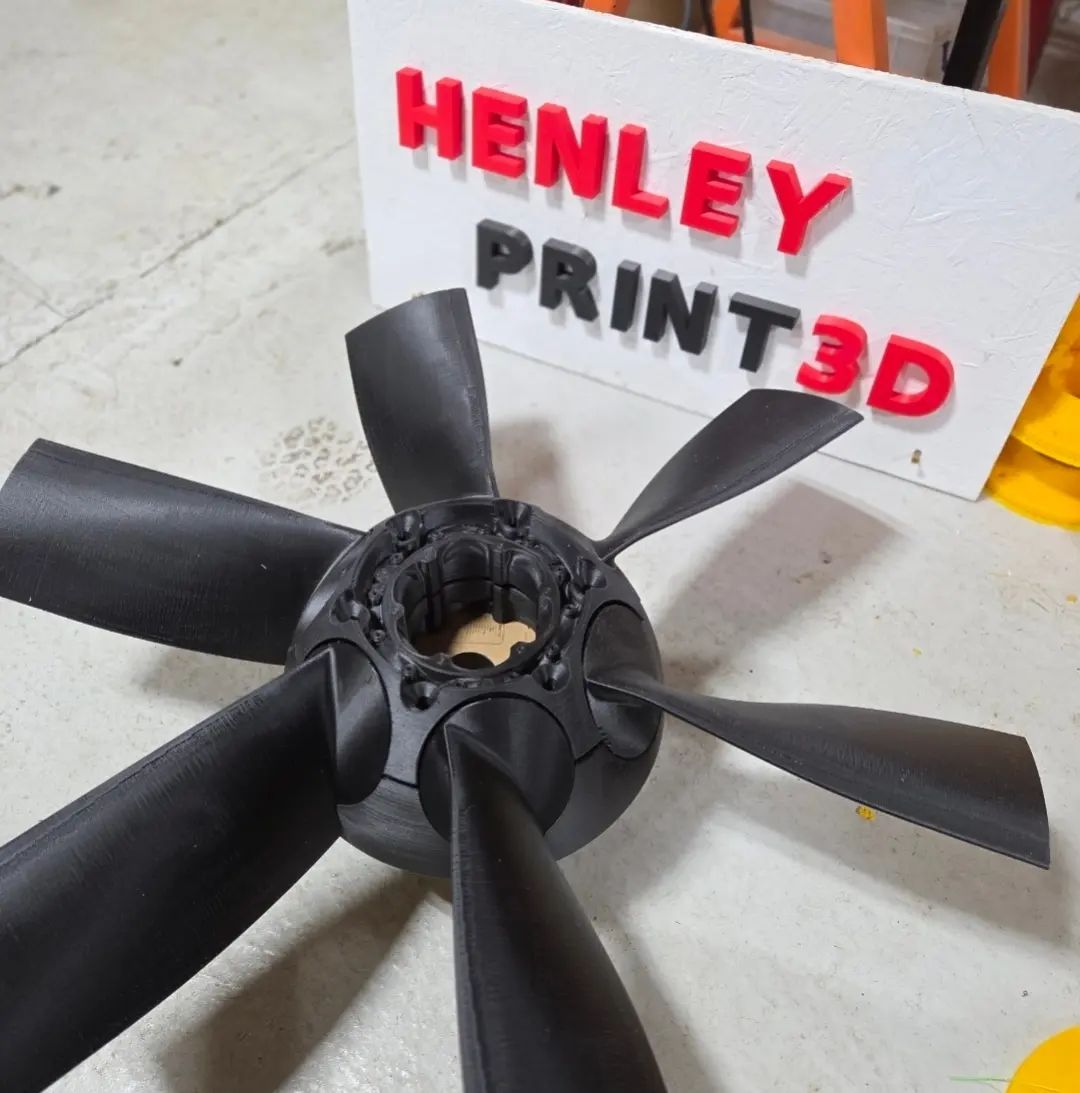
Recyclable carbon fibre turbine unit
A turbine unit made in chopped-strand carbon fibre reinforced polymer, so the finished part can be recycled.
- Material
- Chopped-strand carbon fibre reinforced polymer
- Feature
- Recyclable
- Customer
- European customer
FAQ
Frequently asked questions
What nuclear-sector work do you take on?
Non-safety, low-dose and R&D applications: obsolete spares, maintenance jigs, mock-ups and housings, each with a build record.
How do your plastics behave in radiation?
We use standard thermoplastics and photopolymers. Radiation tolerance depends on polymer, dose and environment, so the table above is a starting point for your engineering authority's materials assessment.
Can you reproduce a part with no drawing?
Yes. We reverse-engineer from the physical part, mark which dimensions are measured and which are inferred, and build a trial for fit-checking.
How long does an obsolete part take?
A simple part can be measured, modelled and trial-printed in a few days. Complex parts take longer. The quote states the date.
Will you keep the files for repeat orders?
Yes, with your agreement. We retain the CAD model and build record so a repeat batch matches the first.
Related
Related processes, materials and guides
Send the worn part
Post or photograph it with the operating environment. We confirm whether a plastic part is suitable before you place an order.