
Prototyping
Rapid prototyping in engineering materials, from 1 calendar day
Our UK rapid prototyping service turns a CAD file into a functional 3D printed prototype in days, so the design can be tested and revised in engineering materials before committing to tooling.
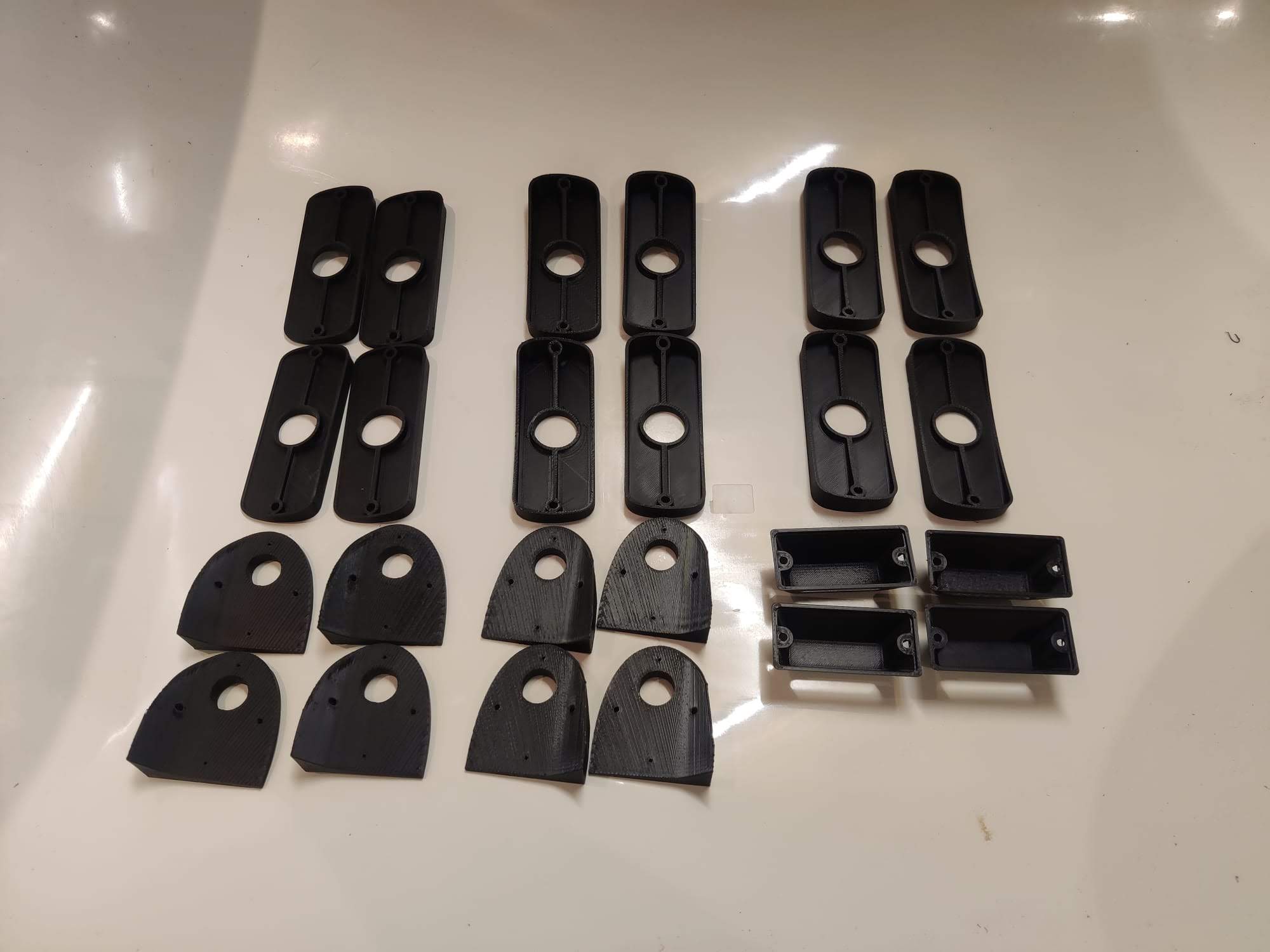
Why prototype with additive manufacturing
Iteration before tooling
Prints in industrial-grade materials, so geometry can be tested before committing to production tooling.
Functional testing
Engineering thermoplastics that hold strength in real use, so a prototype behaves like the production part.
Complex geometry
Intricate shapes and lightweight structures, with no tooling cost.
Lead time from 1 calendar day
FDM and SLA parts from 1 calendar day, SLS from 2 calendar days. An engineer reviews every build.
How a prototype is made
- 01
Prepare
An engineer reviews the CAD model, then orients and slices the build for strength, surface finish and support strategy.
- 02
Print
The part is built layer by layer in the selected process (FDM, SLA, SLS or PolyJet), with layers from 10 microns in SLA.
- 03
Finish
Supports are removed and the surface is finished to the agreed specification.
- 04
Inspect
Parts are checked against the drawing and the stated tolerance before dispatch.
Applications by industry
Aerospace
Tooling, fixtures and lightweight parts.
Automotive
Prototypes and replacement components.
Robotics and automation
Mechanisms and enclosures.
Medical and healthcare
Models and research components.
Energy and nuclear
Tooling and test pieces.
Consumer product design
Rapid iteration before tooling.
Related services and projects
FDM 3D printing
Durable parts up to 1000 × 1000 × 1000 mm, from 1 calendar day.
SLA 3D printing
Fine detail and smooth surfaces from 10 micron resolution.
PolyJet 3D printing
Multi-material photopolymer parts with fine detail.
BBC Mars Rover
Functional prototype parts.
Frequently asked questions
How fast can I get a prototype?
From 1 calendar day, depending on process, size and finishing.
Which process should I prototype in?
FDM for durable functional parts, SLA for fine detail and surface, SLS for tough nylon, and PolyJet for multi-material appearance models.
How accurate are prototypes?
FDM is ±0.5% (min ±0.3 mm), SLA is ±0.5% (min ±0.1 mm), and SLS is ±0.3% (min ±0.3 mm).
Can a prototype be tested like the final part?
Yes, where the printed material matches the production material. Where it does not, we advise how closely it represents the end-use material.
Next step
Send a file for a quote
Get an instant quote or talk to our engineering team about your next build. Uploads are secure and confidential.