Case study · Motorsport
Lotus GT4 intake and fluid ducts in carbon-fibre nylon
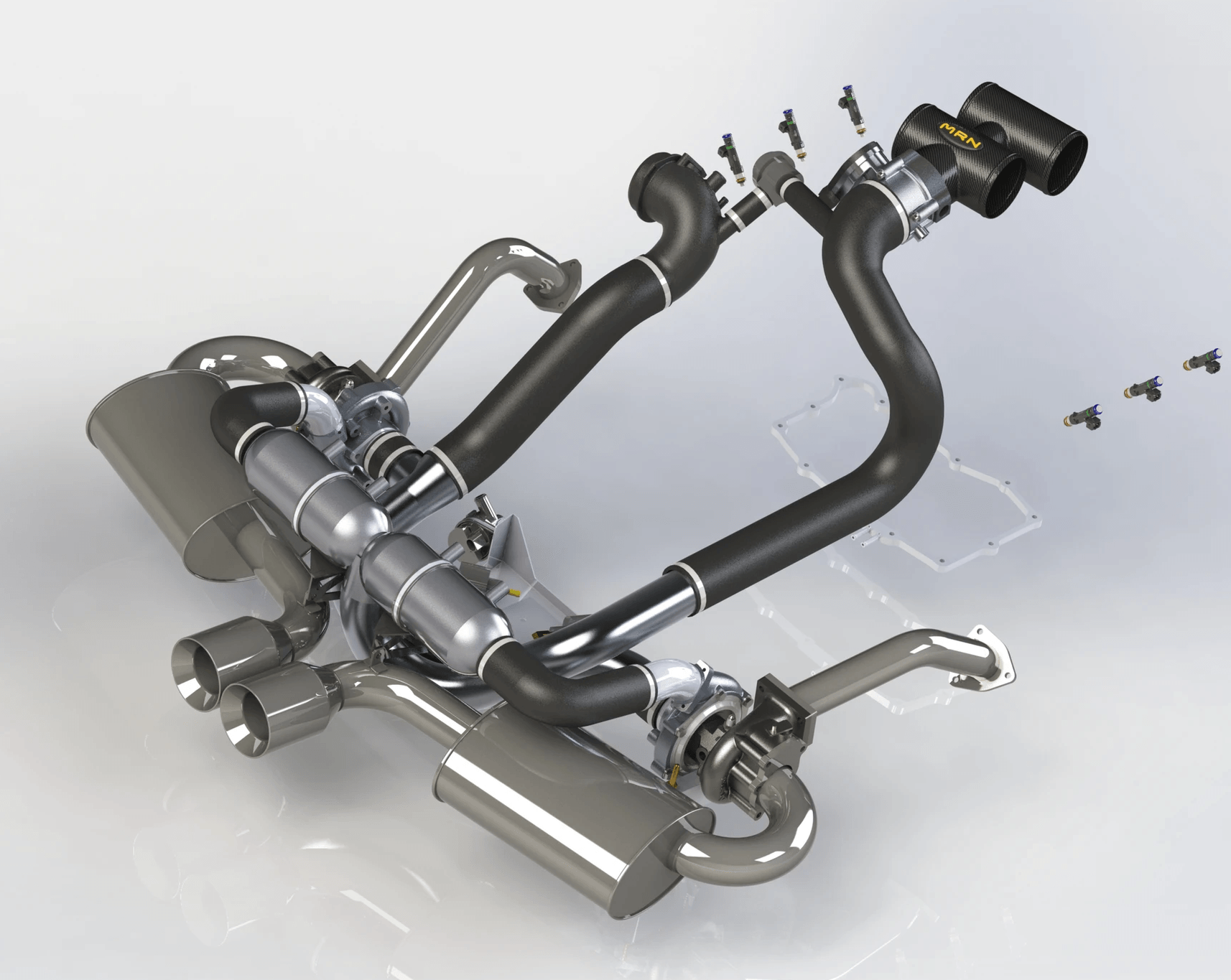
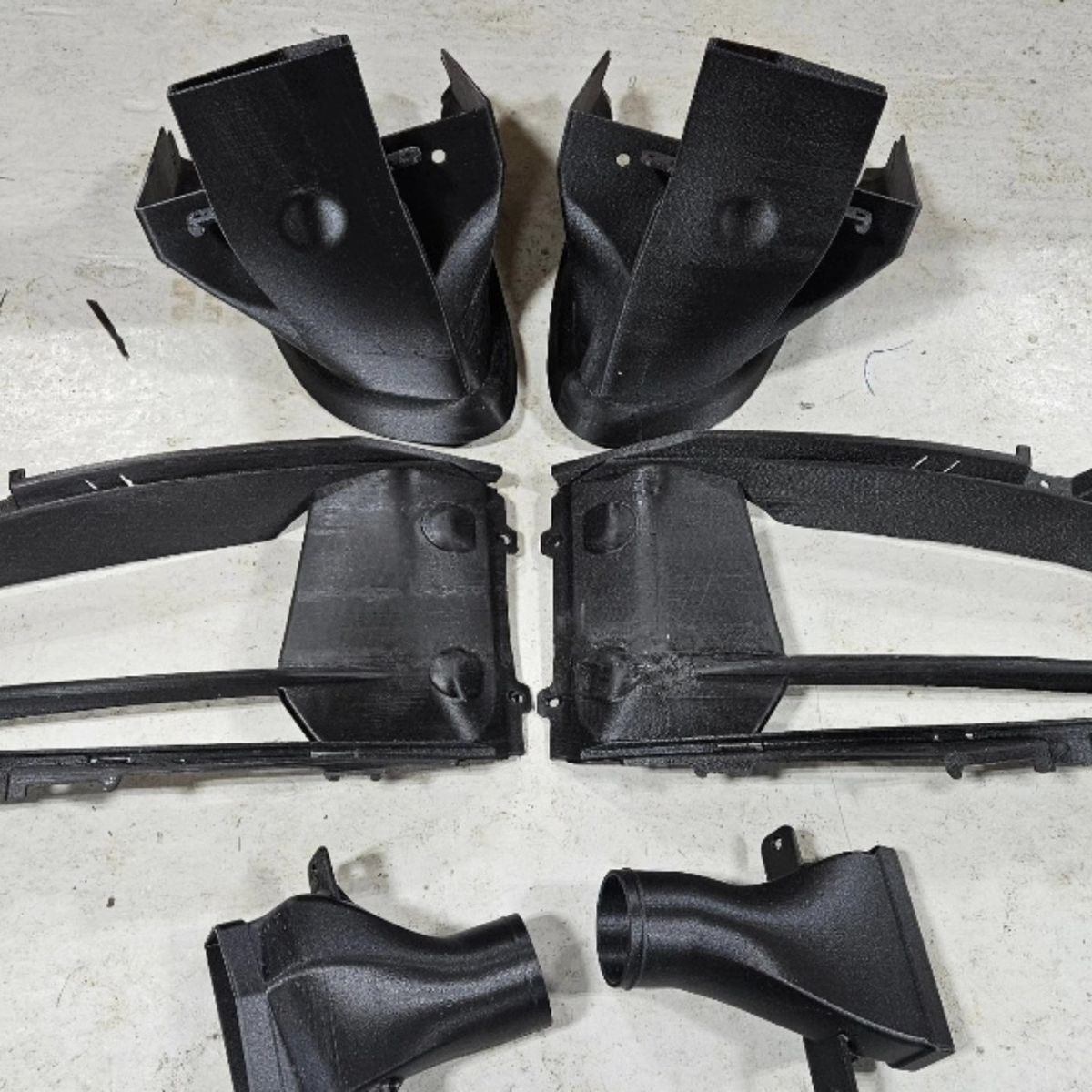
Air intake and fluid ducts for a Lotus GT4 race car, 3D printed in isopropyl-resistant chopped carbon-fibre nylon and turned round quickly for track testing.
Get an instant quote (opens in a new tab)
- Industry
- Motorsport
- Car
- Lotus GT4
- Material
- Chopped carbon-fibre nylon
- Property
- Isopropyl resistant
- Lead time
- Fast, for track testing
Challenge
- Intake and fluid ducts for a GT4 car.
- Resistance to isopropyl.
- Fast lead times so parts reach the track.
Result
- Air intake and fluid ducts in carbon-fibre nylon.
- Delivered on fast lead times for track testing.
Approach
- 01
Choose the material
Chopped carbon-fibre nylon, which resists isopropyl.
- 02
Print the ducts
Intake and fluid ducts produced from the customer's model.
- 03
Turn round fast
Dispatched quickly so the parts could be track tested.
Why this process and material
Why carbon-fibre nylon
Chopped carbon fibre in nylon stiffens thin walls and gives a part that holds its shape under heat and vibration.
Why fast lead time
A duct that fits badly is found at the track. A quick reprint turns that into a same-week fix.
Summary of the engineering approach
Chopped carbon fibre stiffens thin nylon walls so the ducts hold their shape under heat and vibration, and the material resists isopropyl. Fast lead times mattered because a poorly fitting duct only shows up at the track, and a quick reprint keeps the test programme moving.
Questions about this project
What material were the ducts made from?
Chopped carbon-fibre nylon, which resists isopropyl and holds its shape under heat and vibration.
Why were fast lead times needed?
The parts were for track testing, so each revision had to reach the car quickly.
Suggested next steps
Recommendations for taking the part further. None of this is completed work.
- Log track-test findings against each revision so the next print improves on the last.
- Check each duct against the car before fitting.