Case study · Energy
Recyclable carbon-fibre turbine unit, 3D printed
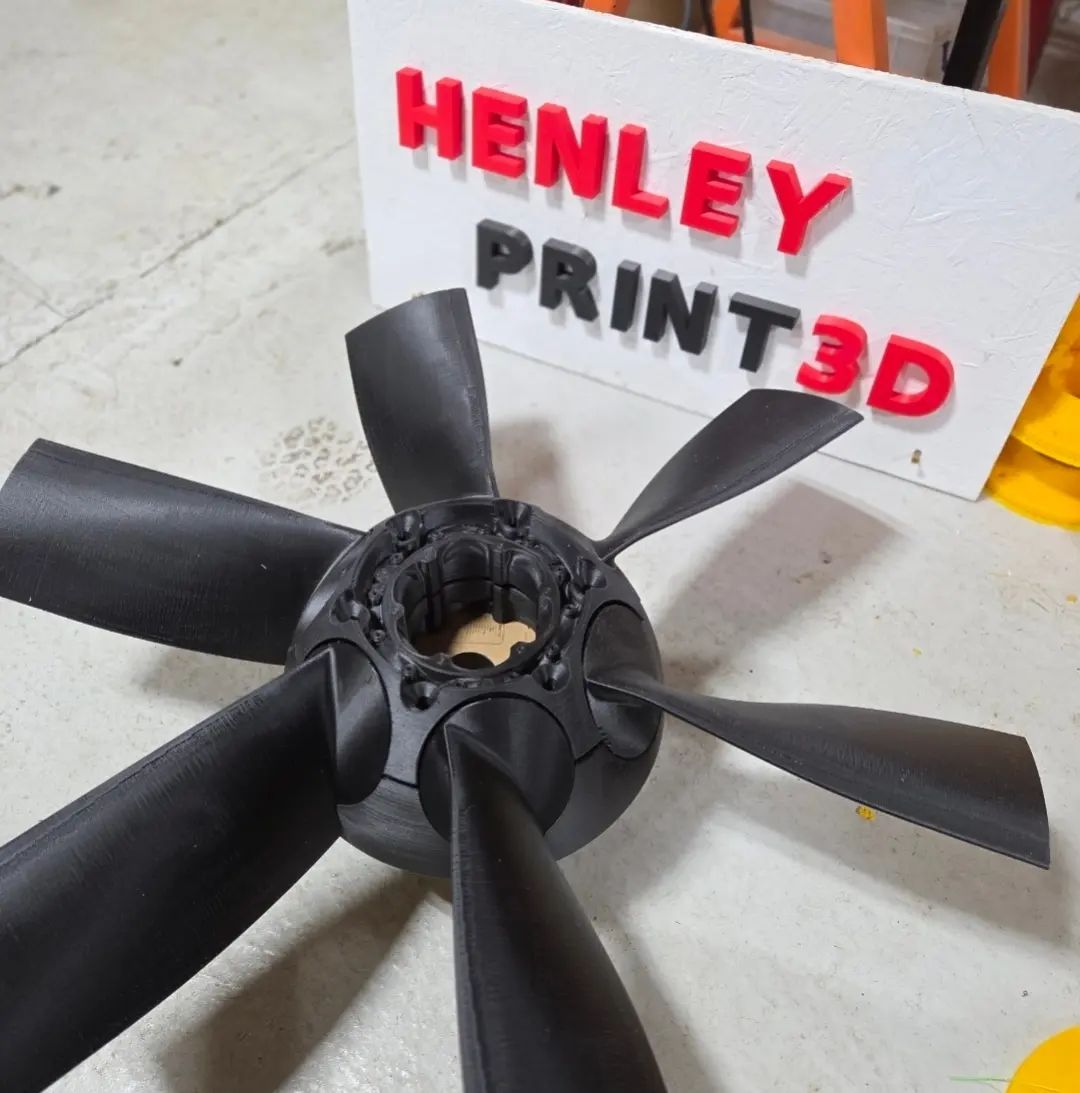
A 3D printed turbine unit for a European energy customer, made in chopped carbon-fibre reinforced thermoplastic so the finished part can be recycled.
Get an instant quote (opens in a new tab)
- Industry
- Energy
- Material
- Chopped carbon-fibre reinforced polymer
- Customer
- European customer
- Feature
- Recyclable material
Challenge
- Make a turbine unit in a carbon-fibre reinforced polymer.
- Keep the material recyclable.
Result
- A recyclable turbine unit in carbon-fibre reinforced polymer.
- Delivered to a European customer.
Approach
- 01
Choose the material
Chopped carbon-fibre reinforced polymer: a thermoplastic filled with short carbon fibres.
- 02
Print the rotor
Hub and blades produced by additive manufacturing, with no tooling.
- 03
Deliver
Shipped to the customer in Europe.
Why this process and material
Why chopped carbon fibre
Short carbon fibres in a thermoplastic add stiffness over an unfilled plastic and print cleanly on large-format machines.
Why recyclability matters
A thermoplastic part can generally be reprocessed at the end of its life. A thermoset composite layup usually cannot.
Summary of the engineering approach
Recyclability set the material choice. A thermoplastic can generally be reprocessed at the end of its life, where a thermoset composite layup usually cannot, and short carbon fibres add the stiffness an unfilled plastic lacks. The rotor was printed without tooling and delivered to a European customer.
Questions about this project
What is the turbine made from?
Chopped carbon-fibre reinforced polymer, a thermoplastic filled with short carbon fibres that can generally be reprocessed at end of life.
Where did it go?
It was delivered to a customer in Europe.
Suggested next steps
Recommendations for taking the part further. None of this is completed work.
- Test the unit at the customer's operating speed and temperature before committing to a batch.
- Compare the printed rotor with the existing material on mass and cost.