Case study · Motorsport
Motorsport oil sumps, large-format 3D printed
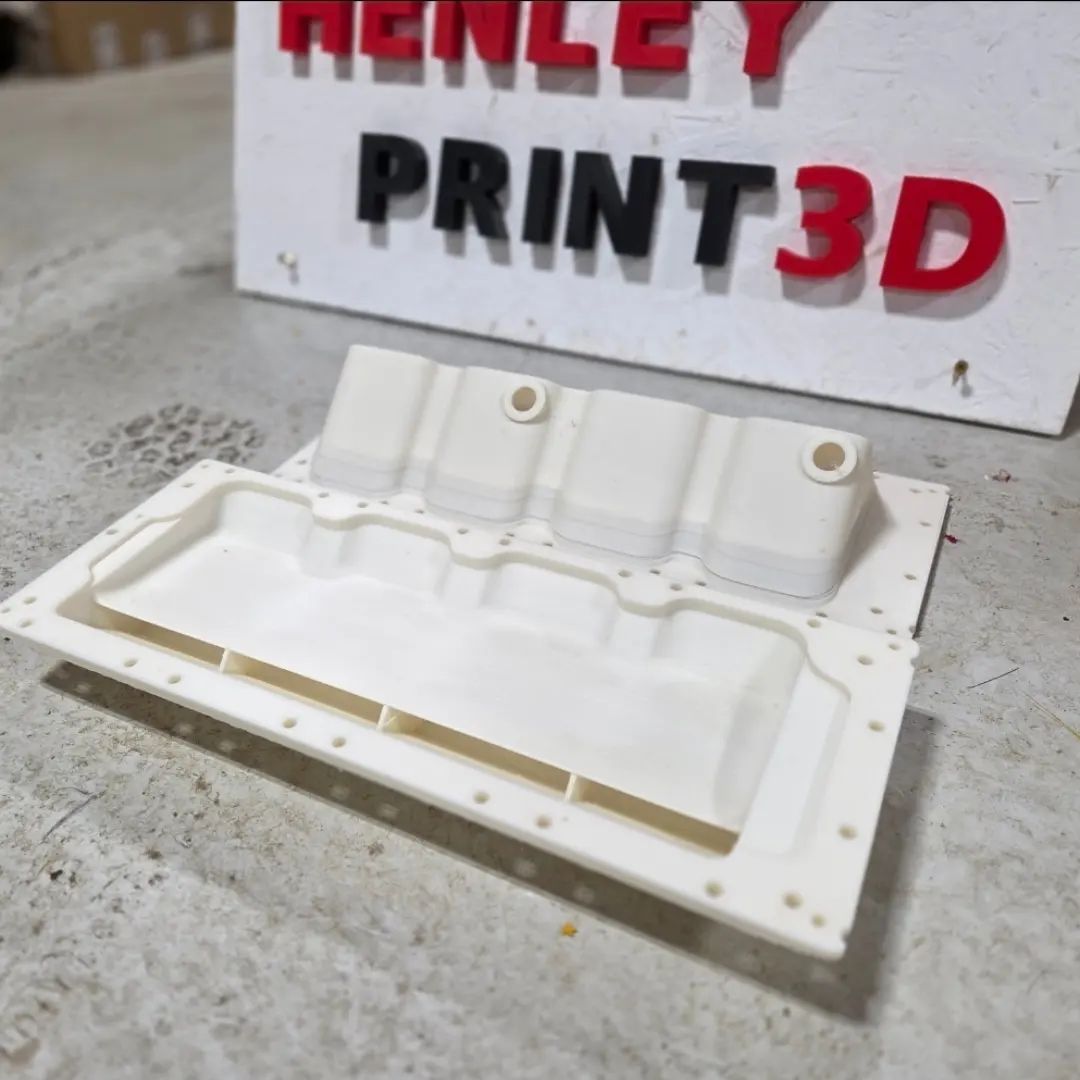
Power-unit oil sumps for a New Zealand motorsport firm, designed with geometry that improves oil cooling and printed whole on large-format, high-temperature machines.
Get an instant quote (opens in a new tab)
- Industry
- Motorsport
- Part
- Power-unit oil sump
- Process
- Large-format, high-temperature machines
- Customer
- New Zealand motorsport firm
- Feature
- Geometry that improves oil cooling
Challenge
- Large power-unit oil sumps.
- Geometry that helps cool the oil.
- A material and machine that cope with the heat.
Result
- Oil sumps with cooling geometry for a power unit.
- Delivered to a New Zealand motorsport firm.
Approach
- 01
Design for cooling
Cooling geometry was built into the sump rather than added afterwards.
- 02
Print on large-format, high-temperature machines
The sump was printed whole on machines sized and heated for the part.
- 03
Ship to New Zealand
Delivered to the customer's workshop.
Why this process and material
Why geometry matters
Printing allows internal and external features that would need extra machining or fabrication in a cast or welded sump.
Why high-temperature machines
Large parts in high-temperature material need a heated build environment to print reliably.
Summary of the engineering approach
Printing let the cooling features form part of the sump itself, rather than being machined or fabricated afterwards as they would be on a cast or welded sump. A part this large in a high-temperature material needs a heated build environment, so the sumps were printed whole on large-format, high-temperature machines.
Questions about this project
Who were the sumps made for?
A motorsport firm in New Zealand. The sumps were shipped to the customer's workshop.
What is special about the geometry?
Cooling features are built into the sump to improve oil cooling, instead of being added afterwards.
Suggested next steps
Recommendations for taking the part further. None of this is completed work.
- Test the printed sump on the dyno before committing to a run.
- Iterate the cooling geometry between test sessions.