Case study · Marine
Carbon-fibre nylon yacht louvres, 3D printed
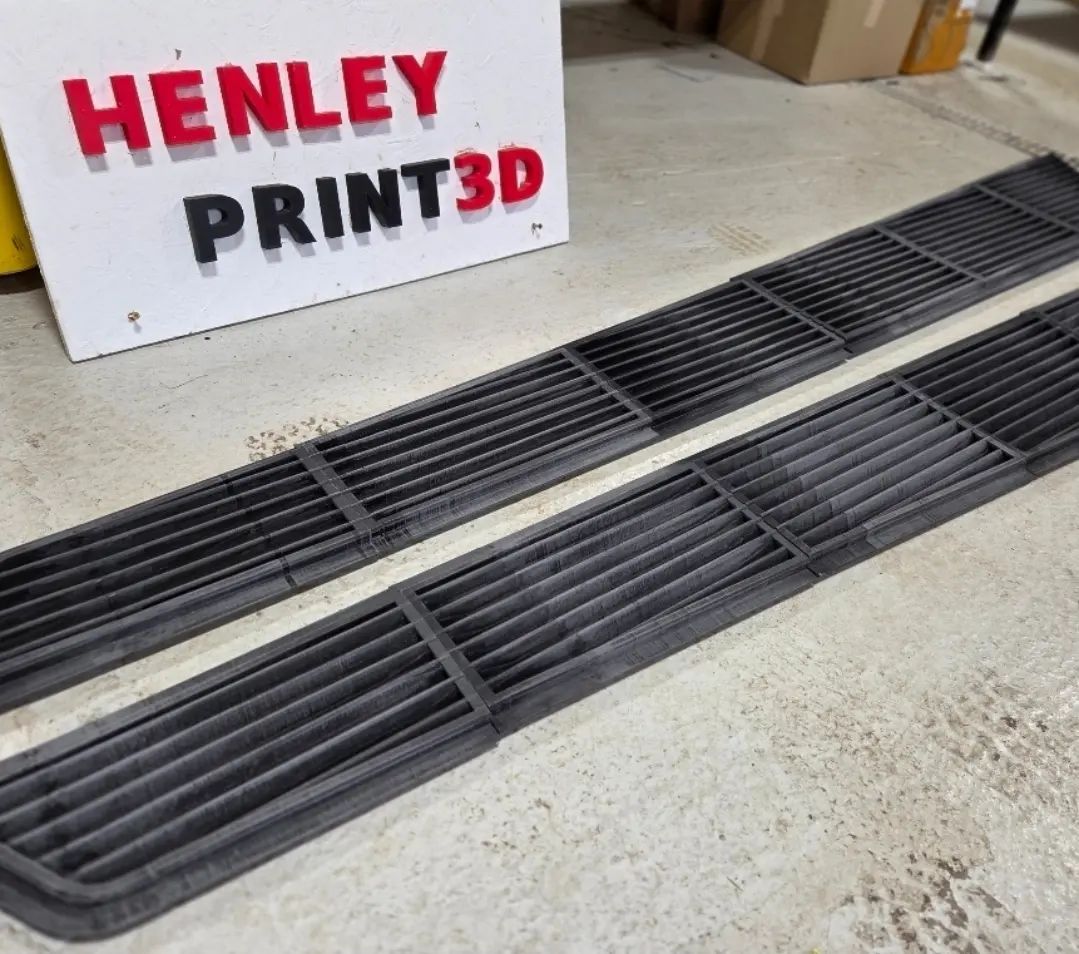
Large slatted louvres for a luxury yacht, 3D printed in carbon-fibre nylon on large-format machines. Splitting each louvre into six parts cut production time by 90%, and the louvres were shipped overnight to California.
Get an instant quote (opens in a new tab)
- Industry
- Marine
- Material
- Carbon-fibre nylon
- Process
- Large-format printing
- Split
- Six parts per louvre
- Production time
- Cut by 90%
- Delivery
- Overnight to California
Challenge
- Large slatted louvres for a luxury yacht.
- A faster route than the existing production method.
- Delivery to California.
Result
- Production time cut by 90%.
- Louvres shipped overnight to California.
Approach
- 01
Split each louvre into six
Six smaller parts print faster and fit the machines.
- 02
Print in carbon-fibre nylon
A stiff material for long, thin slats.
- 03
Ship overnight
Dispatched overnight to California.
Why this process and material
Why split the part
Splitting a long part lets several pieces print at once and keeps each within the build volume.
Why carbon-fibre nylon
Chopped carbon fibre stiffens thin slats so they stay straight.
Summary of the engineering approach
Splitting a long part lets several pieces print at once and keeps each within the build volume, which is how production time was cut by 90%. Chopped carbon fibre stiffens the thin slats so they stay straight. The finished louvres were shipped overnight to California.
Questions about this project
How much time did splitting save?
Splitting each louvre into six parts cut production time by 90%.
Where were the louvres delivered?
To California, shipped overnight.
Suggested next steps
Recommendations for taking the part further. None of this is completed work.
- Check the joint between the six parts for fit and finish before repeat orders.
- Agree a colour or coating if the louvres are exposed to sun and salt.